
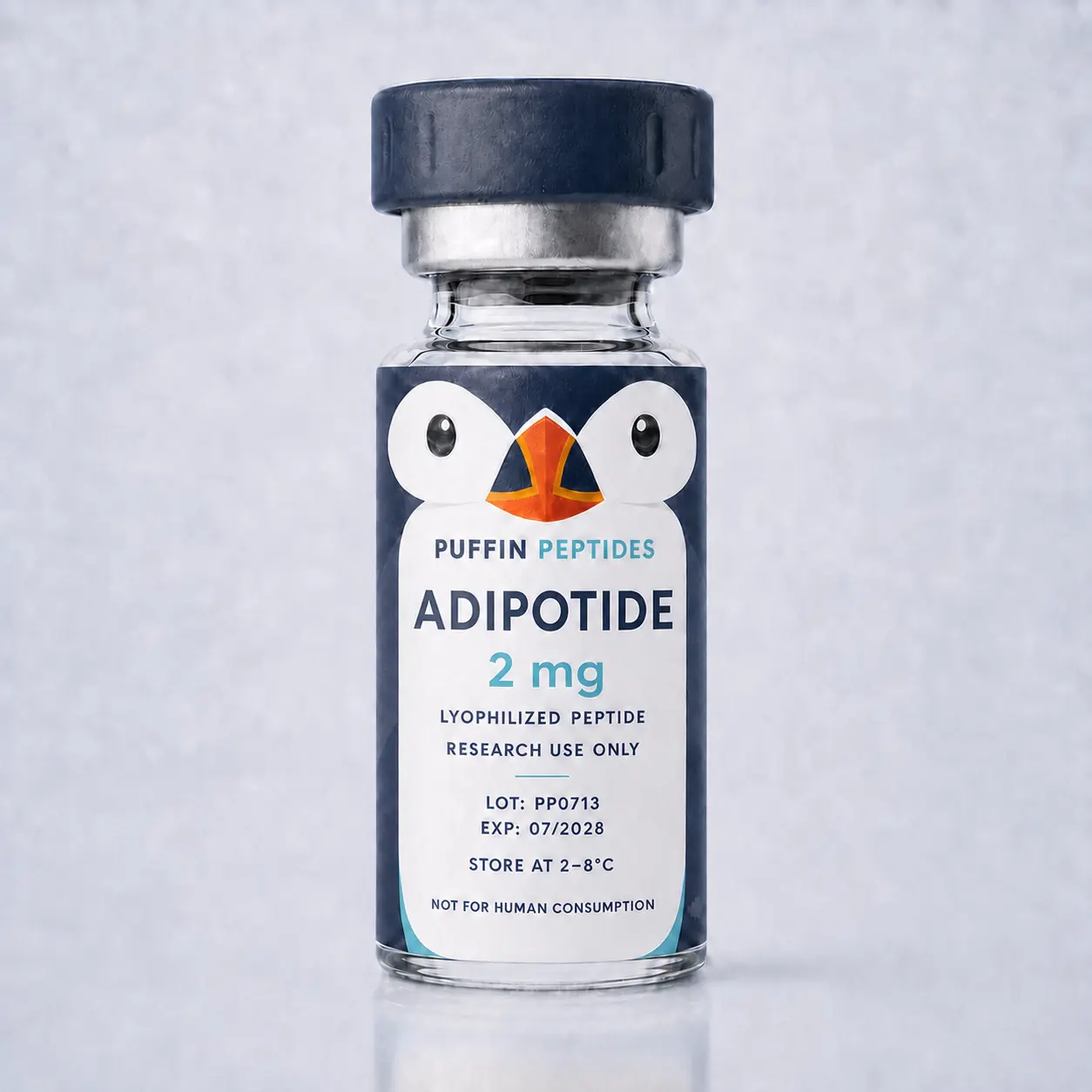
 Catalogue preview · final packaging and presentation may vary if stocked
Five choices across your ballotUse votes only for compounds you would consider ordering
One vote per compoundEach candidate can be selected once on this browser
Flexible interest signalRemove or reassign a vote whenever you like
ADIPOTIDE
Adipotide is an experimental peptidomimetic designed to target prohibitin-associated blood vessels in white adipose tissue and deliver a pro-apoptotic sequence. Its research strategy targets the tissue’s blood supply rather than an appetite receptor.
Loading your saved choices…
ADIPOTIDE is currently being evaluated through customer voting and is not available to order. Final product specifications and batch documentation will be published only if it joins the catalogue.
This page records catalogue interest only. If ADIPOTIDE is selected for supply, Puffin will publish the confirmed format, batch documentation, and laboratory preparation information on the product listing.
Storage and handling requirements depend on the final supplied format. Confirmed instructions will be provided with the batch details if this candidate is added to the catalogue.
Understanding Adipotide
Explore the science, research focus, and key information behind this compound.
What is Adipotide?+
Adipotide is a specialist choice when targeted tissue response is part of the study design.
What Researchers Study+
Researchers examine Adipose-vasculature models, Targeted cellular-response research, and Peptidomimetic selectivity.
How Adipotide Works+
One region binds a vascular marker reported on white-fat blood vessels; another disrupts mitochondria and triggers cell death. In plain language, the design tries to steer a destructive payload toward selected vasculature—a fundamentally different approach from incretin or amylin agonists.
Research at a Glance+
Weight and insulin-resistance changes were reported in obese monkeys. A 2011 study reported reductions in body weight and improved insulin sensitivity in obese rhesus monkeys after a prohibitin-targeting peptidomimetic. It was preclinical work and included reversible renal effects. Read the primary primate study. This is not an appetite-pathway peptide. Adipotide was designed around vascular targeting and apoptosis. Comparing it with GLP-1 agonists requires care because the proposed biological route and safety questions are entirely different. Primate data are still not human evidence. A signal in rhesus monkeys can justify more research, but it does not establish safe exposure, appropriate dose, or clinical effectiveness in people.
If this candidate is added to the catalogue, it would be offered for controlled laboratory research only. It is not for human consumption and is not represented as a medicine, treatment, supplement, or substitute for an approved product.