
At A Glance
- BPC-157 is a synthetic peptide made from 15 amino acids.
- Tendon cells, tissue response, and gastrointestinal models are recurring research themes.
- The studies below separate the actual observations from the next questions researchers want to answer.
What Is BPC-157?
BPC-157 is a chain of 15 amino acids, often described in papers as a stable gastric pentadecapeptide. That technical word simply means a peptide with fifteen building blocks.
Its literature explores how tissues respond to stress and injury. You will see studies involving tendons, ligaments, the gut, and blood-vessel-related signals. The common thread is the process of tissue response rather than one isolated receptor.
That is why the compound appears in several conversations at once. Different tissues share some biological processes, while each study still asks its own specific question.
Why Do People Connect BPC-157 With Recovery?
Several frequently cited studies looked at injured tendons or ligaments in rats. Researchers reported changes in measures of healing, tissue structure, and strength. Other experiments examined tendon cells moving, growing outward, and surviving stress.
Cell movement is an interesting part of that picture: tissue response involves cells reaching the right places and organizing their surroundings. These findings explain the recovery interest and provide a starting point for more focused human research.
The Studies Behind The Recovery Conversation
Here is what the commonly cited work actually looked at. Most of it is cell or animal research; the human study records below show the next questions being pursued.
| Study or context | What was explored | What it tells us | Useful context |
|---|---|---|---|
| Rat Achilles-tendon transection | A 2003 experiment evaluated functional, biomechanical, and microscopic outcomes after complete Achilles-tendon transection in rats. | The authors reported improved measures of tendon healing in treated animals compared with controls. | The study involved surgically injured rat tendons. That model is the context for the reported healing changes. |
| Rat tendon-to-bone and ligament models | Separate experiments studied healing after tendon detachment from bone and after medial collateral ligament injury in rats. | The publications reported improvements in selected biomechanical and histological outcomes. | Each experiment examined a specific injury and selected tissue measurements. |
| Tendon fibroblast experiments | Researchers studied rat tendon cells and tissue samples outside the body, following cell growth, movement, and survival. | BPC-157 was associated with increased cell movement or outgrowth and changes in FAK and paxillin, proteins involved in cell attachment and movement. | This helps explore how cells respond; it is a different measurement from recovery after a human injury. |
| Registered human studies | A phase 1 safety and pharmacokinetic study was registered in 2015, and a randomized phase 2 hamstring-strain trial was registered in 2026. | The registries show that formal human questions have been proposed, including return-to-sport and MRI outcomes in the phase 2 protocol. | The records describe planned studies. This guide does not report completed, peer-reviewed efficacy results from them. |
What Would Make The Human Picture Clearer?
A trial focused on a defined injury is more informative than a general recovery claim. The registered hamstring-strain study is interesting for that reason: it names a particular injury and follows outcomes such as return to sport and MRI findings.
Recovery also involves rehabilitation, time, and the starting injury. A comparison group helps researchers work out what the study treatment contributes. That is why controlled trials add something different from individual recovery stories.
What Should Readers Know About The Wider Context?
Human safety and longer-term effects remain incompletely characterized. The linked FDA and Health Canada records explain the concerns around research materials, including identity, impurities, and immune responses.
For tested athletes, BPC-157 is listed under S0 on the World Anti-Doping Agency Prohibited List. That is a separate practical issue from what a tendon-cell experiment found.
Why Is BPC-157 Still An Interesting Research Topic?
The appeal is the connection between small-scale cell behaviour and larger tissue responses. Studies of migration, tendon structure, and gut models offer several routes for exploring that connection.
The most useful next work links a clear question with a clear outcome: which tissue, which response, and over what period? That keeps the discussion specific while leaving room for the science to develop.
Common Questions About BPC-157
Why is BPC-157 discussed for tendons?+
Several frequently cited studies looked at injured tendons or ligaments in rats. Researchers reported changes in measures of healing, tissue structure, and strength. Other experiments examined tendon cells moving, growing outward, and surviving stress.
Why does BPC-157 also come up in gut research?+
Its literature includes gastrointestinal models as well as tendon and tissue-response studies. The shared interest is how tissues respond to stress and injury, while each model examines a specific part of that process.
Has BPC-157 been studied in people?+
Human study records are linked below, including safety and hamstring-strain questions. Most published work discussed here is preclinical, and this guide does not report completed controlled human efficacy results from those records.
Sources
Want to go a little deeper? These links take you to the studies and official records behind the guide. Study registries describe the plan; published papers report the findings.
- Gastric pentadecapeptide BPC 157 positively affects both non-union and function recovery in transected rat Achilles tendonJournal of Orthopaedic Research · 2003
Preclinical rat Achilles-tendon model.
- Pentadecapeptide BPC 157 and the healing of the transected tendon in the ratJournal of Orthopaedic Research · 2006
Preclinical tendon-to-bone healing study.
- Pentadecapeptide BPC 157 improves ligament healing in the ratJournal of Orthopaedic Research · 2010
Preclinical medial collateral ligament model.
- The promoting effect of pentadecapeptide BPC 157 on tendon healing involves tendon outgrowth, cell survival, and cell migrationJournal of Applied Physiology · 2011
Rat tendon explant and fibroblast research.
- Pentadecapeptide BPC 157 enhances the growth hormone receptor expression in tendon fibroblastsMolecules · 2014
Tendon-fibroblast study of growth-hormone receptor expression and downstream JAK2 signalling.
- A Study to Evaluate the Safety and Pharmacokinetics of BPC-157ClinicalTrials.gov · NCT02637284 · Current record
Registered phase 1 record; registry status is not a peer-reviewed result.
- BPC-157 for Acute Grade II Hamstring StrainClinicalTrials.gov · NCT07437547 · Current record
Registered randomized phase 2 protocol; no results are reported in this guide.
- Certain Bulk Drug Substances for Use in Compounding May Present Significant Safety RisksU.S. Food and Drug Administration · Current page
Official safety-risk statement that includes BPC-157.
- Think twice before injecting peptides bought onlineHealth Canada · 2026
Official Canadian warning about unauthorized injectable peptide products.
- 2026 Prohibited ListWorld Anti-Doping Agency · 2026
BPC-157 is listed under S0 non-approved substances.
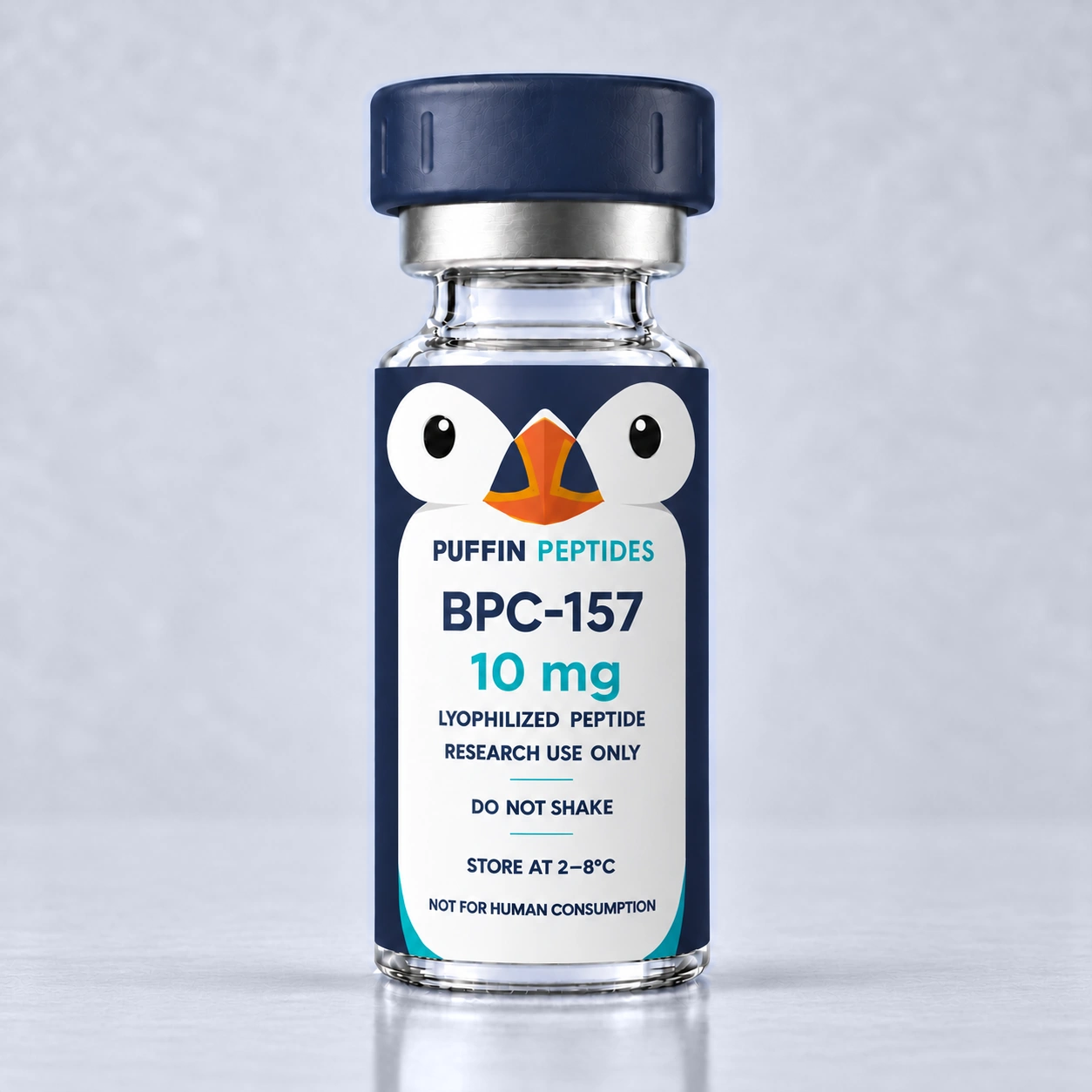
Explore BPC-157
Review available strengths, pricing, stock status, and product documentation.