
Lacey HughesVerified buyer
Nice site and helpful chat bot. I’ll be back again.
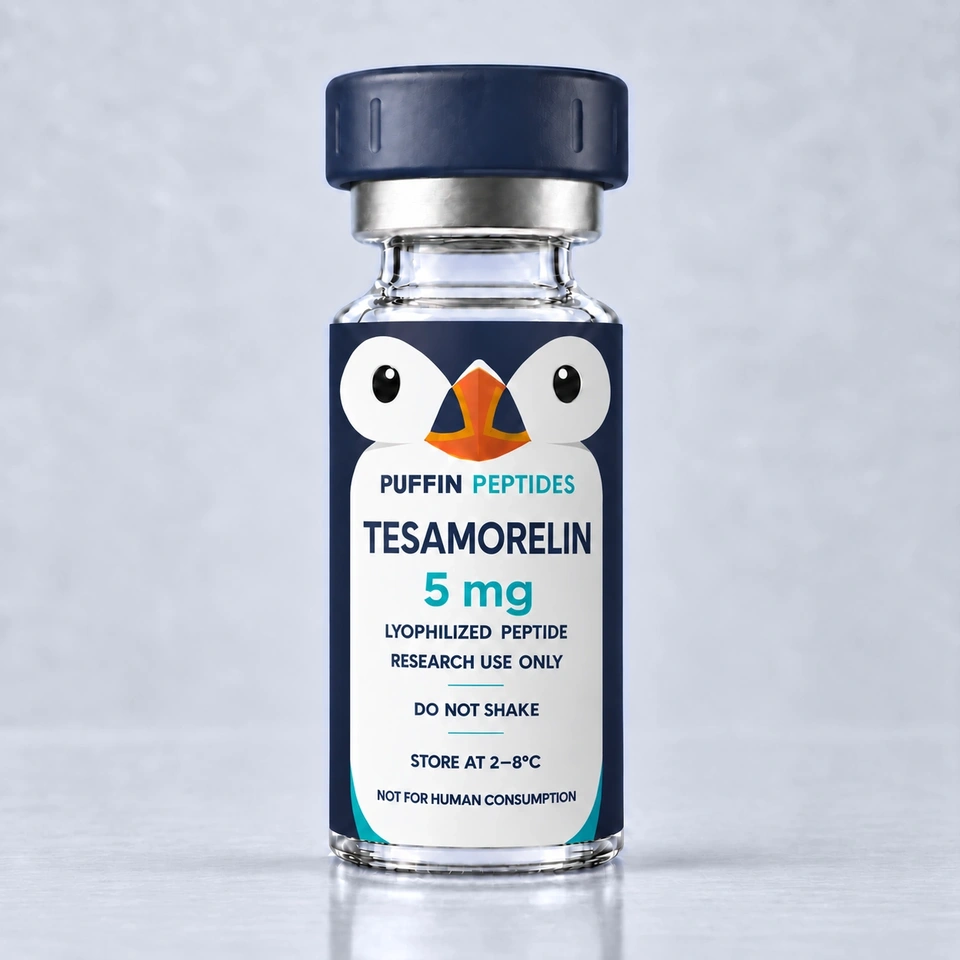
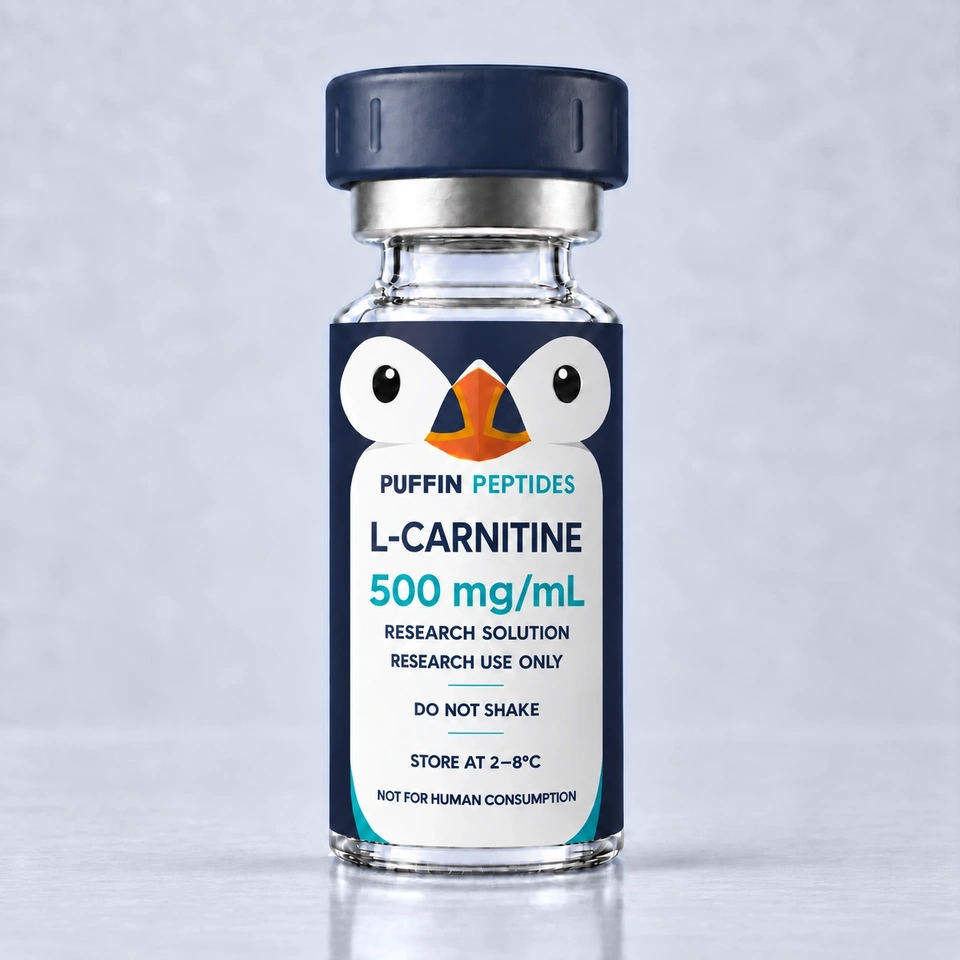 Full vial shown · package appearance may vary by batch
24/7 Customer Support
Lab tested for purity & quality
Ships from Canada within 24 hours
At Puffin Peptides, we work with an established Canadian manufacturer and handle packaging and fulfilment here in Canada. Keeping the process close to home gives us better visibility into quality, consistency, packaging, and the batches moving through our catalogue.
That means clearer product information, accessible batch documentation, responsive local support, and a more dependable ordering experience from checkout to delivery.
Our focus is simple: well-made research products, straightforward information, and reliable Canadian service.
Turn stored fuel into usable energy. L-Carnitine is an amino-acid-derived compound that helps transport fatty acids into the mitochondria, where they can be burned for energy. It is commonly used to support endurance, exercise performance, fat metabolism, and recovery—helping the body make better use of its natural energy reserves.
L-CARNITINE is supplied as 500 mg/mL research solution in a sealed glass vial for laboratory research. Confirm the selected vial and batch details before preparation.
L-carnitine is a naturally occurring metabolite required for transport of long-chain fatty-acyl groups into mitochondria for beta-oxidation.
This molecular identity is separate from the existing prepared-liquid product concentration and format.
L-CARNITINE is supplied as a prepared research solution. Confirm the vial label and batch details before handling.
Review the verified vial label and lot-specific documentation for concentration, storage, preservative, and handling details. Do not treat a supplier concentration as a complete preparation or use protocol.
A clear, quick look at what L-CARNITINE is, how it works, and why it is being studied.
L-Carnitine is best known for energy, exercise, recovery, and fat metabolism. Its everyday job is helping move fatty acids into mitochondria so cells can use them as fuel.
L-carnitine is a naturally occurring quaternary ammonium compound essential to the carnitine shuttle that transports long-chain fatty acids into mitochondria for beta-oxidation. Human supplementation research spans exercise, deficiency states and metabolic outcomes. [1]
Stored fat cannot power a cell unless it reaches the engine. L-Carnitine acts like a shuttle carrying fatty acids into that engine so they can be turned into usable energy.
Long-chain fatty acids require the carnitine shuttle to cross the inner mitochondrial membrane for oxidation. Calling carnitine a “fuel shuttle” is a fair simplification of established biochemistry. [1]
It helps with the transport step, but it is not a magic switch that melts fat regardless of food and activity. Think fuel shuttle, not automatic furnace.
Carnitine is necessary for fatty-acid transport, but adequate pathway function does not mean extra carnitine automatically causes fat loss. Human outcomes depend on baseline status, tissue uptake, diet, training and study design. [1]
No. Caffeine changes alertness; L-Carnitine helps cells process fuel. Its appeal is supporting the energy system rather than creating a quick buzz.
No. Carnitine supports mitochondrial fatty-acid transport rather than acute adenosine-receptor blockade. It should not be described as a stimulant. [1]
Muscles need a steady supply of energy during activity. Because L-Carnitine helps move fat toward the cell’s power plants, it naturally attracts interest around endurance and recovery.
Exercise research is biologically plausible because muscle fuel selection and mitochondrial metabolism depend partly on carnitine. Systematic reviews show mixed, context-dependent performance effects rather than universal benefit. [1]
That interest comes from energy availability and how muscles handle exercise stress. Better fuel handling may support the work the body does between demanding sessions.
A meta-analysis of randomized trials reported reductions in some markers of exercise-induced muscle damage and soreness, but effects varied by timing, population and endpoint. [2]
Both conversations connect to fuel use. Exercise asks cells to produce energy, while weight management asks how stored and incoming fuel is handled over time.
Its established biochemical role concerns fuel transport; exercise and body-composition questions are separate clinical outcomes. Evidence should be evaluated independently rather than inferred from the pathway alone. [1]
Its role is practical: pick up fatty acids, carry them into mitochondria, and help make them available for energy. It is one of the clearest links between fat and cellular fuel.
Its core mechanism is unusually concrete: carnitine participates directly in transporting long-chain fatty-acyl groups into mitochondria. The caution is that an essential biochemical role does not guarantee that additional supplementation improves every outcome. [1]
This product is offered for laboratory research only. It is not for human consumption and is not represented as a medicine, treatment, supplement or substitute for an approved product.
Review the verified vial label and lot-specific documentation for concentration, storage, preservative, and handling details. Do not treat a supplier concentration as a complete preparation or use protocol.
In-stock orders are picked, packed, and shipped within 24 hours. Every parcel ships with Canada Post and includes tracking, with free standard shipping when the discounted subtotal reaches $199 CAD before tax.
Every order is prepared and packed in Canada with care, accuracy, and attention to detail. In-stock orders are checked and packed within 24 hours, then shipped with Canada Post. Tracking is sent after the parcel’s first carrier scan.

2 customer reviews
Reviews are checked before publication. Your email is never displayed.
Nice site and helpful chat bot. I’ll be back again.
I can’t believe it but I’ve lost 30lb. It’s been 3 months and felt compelled to write a review. I know it’s not Puffin I have to thank but their site came up in google and brought me here. Thank youuuuuu! <3
Products in the same research area, each with its own pathway, evidence level and selectable strengths.
Only logged in customers who have purchased this product may leave a review.
Reviews
There are no reviews yet.