
At A Glance
- L-Carnitine is involved in moving long-chain fatty acids into mitochondria, where they can be used in energy production. That transport role explains its connection to metabolic and exercise-related discussions.
- Carnitine participates in the shuttle carrying long-chain fatty acids into mitochondria.
- Deficiency, diet, tissue, and transporter function can shape the response.
What Is L-Carnitine?
L-Carnitine is involved in moving long-chain fatty acids into mitochondria, where they can be used in energy production. That transport role explains its connection to metabolic and exercise-related discussions.
The carnitine shuttle helps move these fuel molecules across the inner mitochondrial membrane. L-Carnitine also helps manage acyl groups, parts of molecules that cells move around during metabolism. It is an amino-acid-derived compound rather than a peptide.
Why Does The Starting Point Matter?
A system short of carnitine is asking a different question from one that already has enough. Diet, transporters, and tissue levels can all influence what a study finds. Knowing that starting point makes an energy-related result much easier to interpret.
Is L-Carnitine Doing The Same Job As MOTS-C?
L-Carnitine participates in fuel transport; MOTS-C is studied as a metabolic signal. Both connect with mitochondria, but in different ways. The transport role is well established, while performance or body-composition outcomes are separate study questions.
A Closer Look At L-Carnitine
Here are the key observations and the context that helps explain them. The original sources are linked below if you would like to explore further.
| Study or context | What was explored | What it tells us | Useful context |
|---|---|---|---|
| Established metabolism | Fatty-acid transport | Carnitine participates in the shuttle carrying long-chain fatty acids into mitochondria. | This is a defined biochemical role. |
| Study context | Baseline carnitine and transport | Deficiency, diet, tissue, and transporter function can shape the response. | Those details matter when comparing supplementation studies. |
Common Questions About L-Carnitine
What is L-Carnitine?+
L-Carnitine is involved in moving long-chain fatty acids into mitochondria, where they can be used in energy production. That transport role explains its connection to metabolic and exercise-related discussions.
Why does the starting point matter?+
A system short of carnitine is asking a different question from one that already has enough. Diet, transporters, and tissue levels can all influence what a study finds. Knowing that starting point makes an energy-related result much easier to interpret.
Is L-Carnitine doing the same job as MOTS-C?+
L-Carnitine participates in fuel transport; MOTS-C is studied as a metabolic signal. Both connect with mitochondria, but in different ways. The transport role is well established, while performance or body-composition outcomes are separate study questions.
Sources
Want to go a little deeper? These links take you to the studies and official records behind the guide. Study registries describe the plan; published papers report the findings.
- Relationship between carnitine, fatty acids and insulin resistancePubMed-indexed publication · 2010
Established pathway biology supports focused transport and metabolism studies, not a universal enhancement claim.
- Think twice before injecting peptides bought online: unauthorized products can seriously harm youHealth Canada · 2026
For L-Carnitine context, this official Canadian advisory explains why a research-use label does not establish authorization, safety, efficacy, or product quality for human use.
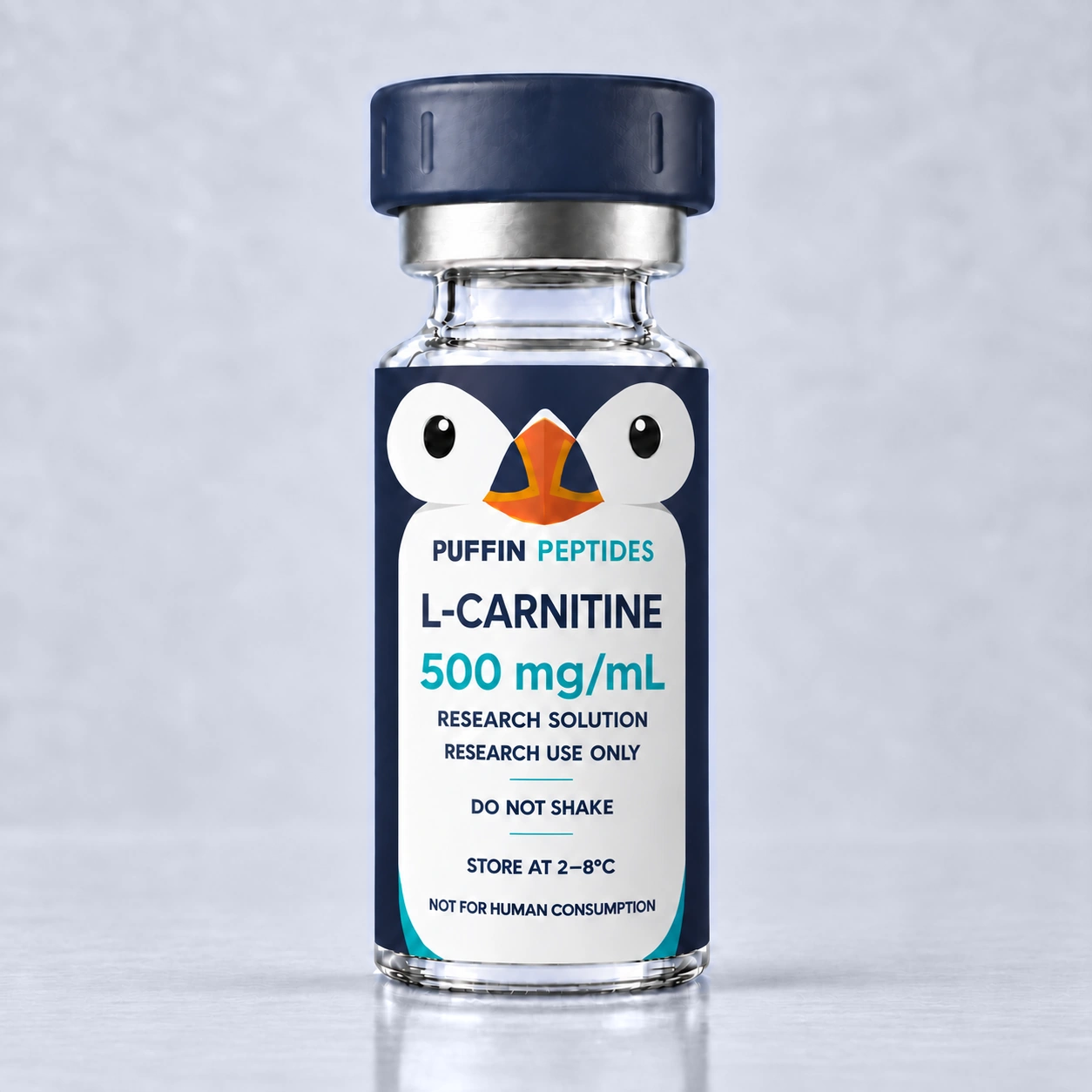
Explore L-CARNITINE
Review available strengths, pricing, stock status, and product documentation.