Skip to content
Every Peptide Explained & Sourced
Longevity Research

NAD+

5.0ReviewsRead more

Fuel your body where energy begins. NAD+ is a naturally occurring coenzyme that helps cells turn nutrients into energy while supporting DNA repair, brain function, metabolism, and healthy aging. Often associated with cellular vitality, it is used to promote sharper performance, stronger recovery, and sustained energy from within.

Batch details included Manufactured in Canada
$79 CADCAD · shipping and taxes shown at checkout

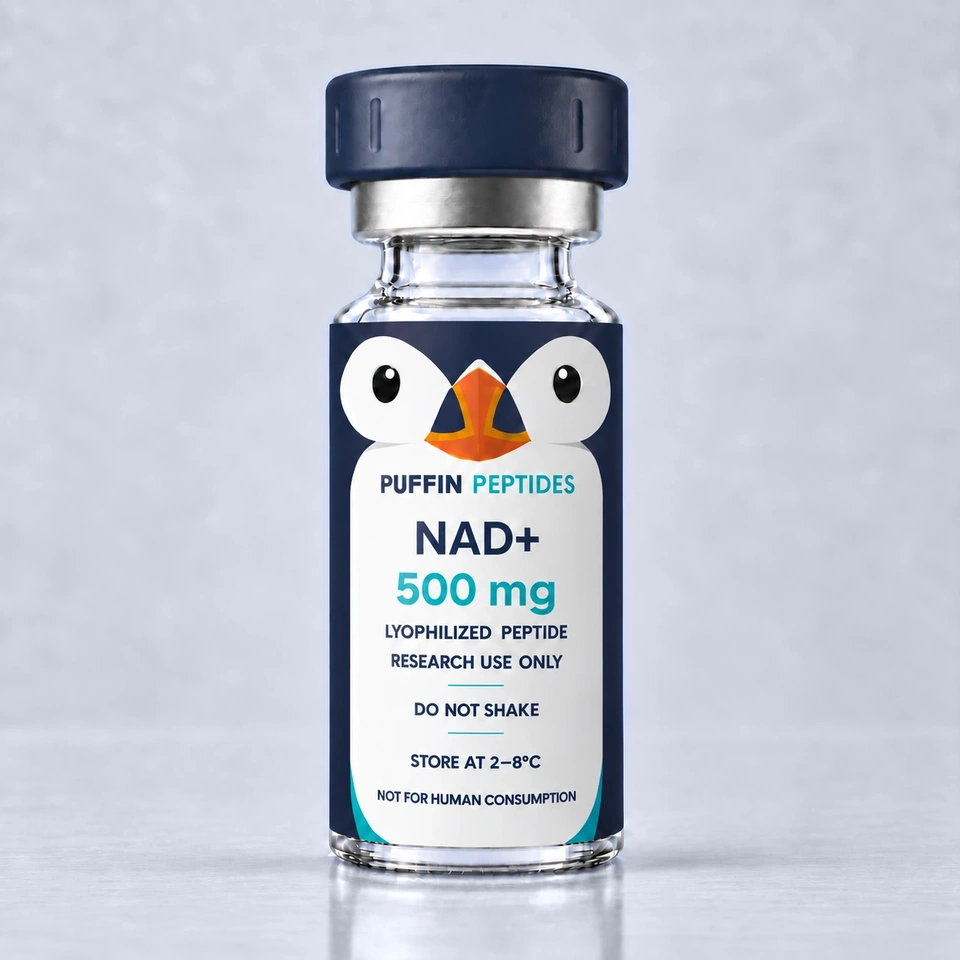
NAD+ is supplied as 500 mg of lyophilized powder in a sealed glass vial for laboratory research. Confirm the selected vial and batch details before preparation.

Selected strength500 mg
Purity99.54%
TestingHPLC-UV
BatchPP-LOT-025
+ Show Scientific Details− Hide Scientific Details
Chemical nameNicotinamide adenine dinucleotide (oxidized form)
Common nameNAD+
CAS number53-84-9
Compound classDinucleotide coenzyme
Molecular formulaC21H27N7O14P2
Molecular weight663.4 g/mol
Research themesRedox metabolism · Cellular energy · Enzyme signalling
Scientific profile

NAD+ is the oxidized form of nicotinamide adenine dinucleotide, a ubiquitous cellular coenzyme involved in redox reactions and used as a substrate by multiple enzyme families.

Protonation and salt forms have slightly different formulae and masses. The displayed identity is tied to the referenced NAD record.

Product guide

NAD+ Explained

A clear, quick look at what NAD+ is, how it works, and why it is being studied.

What is NAD+ supposed to help with?

NAD+ is connected to cellular energy, recovery, mental clarity, and healthy aging. Every cell needs it to turn food into usable energy and complete everyday repair work.

Research Context

NAD+ is an essential redox coenzyme and substrate for enzymes involved in energy metabolism, DNA repair, sirtuin signalling and other cellular processes. That central biology explains its broad research interest, but “energy,” “clarity” and “healthy aging” are not interchangeable clinical endpoints. [1–2]

What does NAD+ do in simple terms?

Think of NAD+ as a helper that lets the cell’s engine run. Without enough of it, converting fuel into energy and keeping up with repairs becomes harder.

Research Context

NAD+ cycles between oxidized and reduced forms during metabolic reactions and is also consumed by enzymes such as sirtuins, PARPs and CD38. It is therefore both a metabolic cofactor and a signalling substrate. [1]

Why do people connect NAD+ with energy?

NAD+ takes part in the reactions that turn nutrients into cellular fuel. The interest is not a caffeine-like jolt; it is helping the machinery that produces energy do its job.

Research Context

NAD+/NADH redox cycling is fundamental to glycolysis, the TCA cycle and mitochondrial oxidative metabolism. That biochemical role is well established; whether raising NAD+ produces a noticeable subjective energy effect depends on intervention, tissue and population. [1–2]

Can NAD+ help with mental clarity?

The brain uses a lot of energy, so cellular fuel and mental performance are closely connected. That is why people often discuss NAD+ around focus, clarity, and feeling less mentally drained.

Research Context

The nervous system depends heavily on energy metabolism, but “mental clarity” is not established simply from NAD+ biochemistry. Human trials of NAD+-raising strategies have produced mixed, endpoint-specific results. [2]

Why does NAD+ come up in healthy-aging conversations?

NAD+ levels tend to decline with age while repair demands continue. Supporting the systems tied to energy and cellular maintenance is what gives it such a strong longevity reputation.

Research Context

NAD+ metabolism changes with age in several tissues and interacts with pathways involved in genomic maintenance, mitochondrial function and stress responses. Human evidence that supplementation broadly slows aging remains much less certain than the mechanistic literature. [1–2]

Is NAD+ mainly for energy or recovery?

They are two sides of the same process. Cells need energy to repair, and effective repair helps tissues keep functioning when life, training, or age puts them under stress.

Research Context

Both themes trace back to cellular metabolism and repair, but they should be separated experimentally. NAD+ participates in energy transfer and is also consumed in DNA-repair/signalling reactions. [1]

Does NAD+ work like a stimulant?

No. A stimulant temporarily makes you feel more switched on. NAD+ sits inside the cell’s actual energy and repair processes, so its appeal is deeper than a quick buzz.

Research Context

No. NAD+ is a cellular coenzyme rather than a classical central-nervous-system stimulant. Its biological role is metabolic and enzymatic, not an acute stimulant mechanism. [1]

What makes NAD+ different from MOTS-C?

Both connect to cellular energy. NAD+ is a basic working molecule used throughout energy and repair, while MOTS-C is a mitochondrial signal studied for how cells respond to fuel and stress.

Research Context

NAD+ is a ubiquitous small-molecule coenzyme used throughout cellular metabolism; MOTS-c is a mitochondrially encoded signalling peptide. They intersect with metabolic biology but are chemically and mechanistically distinct. [1]

Read the full Nad+ evidence guideStudy design, primary sources, limitations, and unanswered questions.Open guide
Research-use statement

This product is offered for laboratory research only. It is not for human consumption and is not represented as a medicine, treatment, supplement or substitute for an approved product.

Preparation guide

Calculate. Prepare. Store.

Confirm the selected vial and BAC-water amount, enter the target amount, then follow the preparation and storage steps.

Step 1: Calculate

The selected strength automatically opens with the easy starting rule of 1 mg = 10 units.

NAD+ · 500 mg selected

Vial Strength
500mg

Easy rule: 1 mg = 10 units · Every 10 units = 1 mg

Calculated result
U-100 syringe20 units2 mg at the current water amount

This calculator converts the values entered. It does not choose an amount.

Step 2: Prepare

This 500 mg vial opens with 50 mL of BAC water, creating the easy starting rule of 1 mg = 10 units.

If the water amount is changed above, use the updated easy rule shown by the calculator.

Do not shake the vialSlowly add the water down the inside wall of the vial, then gently swirl until fully dissolved.

Step 3: Store

Prepared vialsRefrigerate at 2–8°C

Unprepared vialsKeep cool and dry, away from heat, moisture, and direct sunlight

Shipping & delivery

Picked And Shipped Within 24 Hours.

Every order is prepared and packed in Canada with care, accuracy, and attention to detail. In-stock orders are checked and packed within 24 hours, then shipped with Canada Post. Tracking is sent after the parcel’s first carrier scan.

Bilingual Shipped by Canada Post logo with English to the left and French to the right

Customer Reviews

5.0★★★★★

2 customer reviews

Share your experience

Reviews are checked before publication. Your email is never displayed.

2 reviewsShowing 2
Lacey HughesVerified buyer
★★★★★
Puffin Peptides

Nice site and helpful chat bot. I’ll be back again.

Kimmy SonnVerified buyer
★★★★★
Puffin Peptides

I can’t believe it but I’ve lost 30lb. It’s been 3 months and felt compelled to write a review. I know it’s not Puffin I have to thank but their site came up in google and brought me here. Thank youuuuuu! <3

Reviews

There are no reviews yet.

Only logged in customers who have purchased this product may leave a review.

Product documentation

Batch Details

Uploaded documents500 mg
PDF · 500 mgPP-NAD-PLUS-500-MG-R025.pdfPublished for NAD+ 500 mg
View document
ProductNAD+
Strength500 mg
Catalogue codePP-NAD-PLUS-500-MG
PresentationLyophilized powder in a sealed glass vial
StorageSee vial label and lot-specific documentation
Intended useLaboratory research only · not for human consumption

Only uploaded documents published for the selected vial strength are shown here.

Search the catalogue

What Are You Looking For?