
At A Glance
- This pairing brings together two signals that can prompt growth-hormone release. CJC-1295 No DAC uses the GHRH route; ipamorelin uses the ghrelin-receptor route.
- GHRH analogues and ghrelin-receptor agonists both have supporting hormone-release research.
- Separate-component comparisons help distinguish a combined response from one ingredient doing most of the work.
What Is CJC-1295 NO DAC + IPAMORELIN?
This pairing brings together two signals that can prompt growth-hormone release. CJC-1295 No DAC uses the GHRH route; ipamorelin uses the ghrelin-receptor route.
The two receptors can send messages to the same pituitary cells. One resembles the body’s GHRH signal, while the other approaches through the receptor used by ghrelin. That makes the pairing an interesting question about timing and combined signalling.
Why Study The Combination?
When two messages reach the same system, scientists want to know whether the response changes in size, timing, or shape. Studying each component separately alongside the pair is how they find out what each one contributes.
Does The No DAC Detail Matter?
Yes. No DAC usually refers to a short-acting modified GRF design. CJC-1295 With DAC uses albumin binding to extend exposure. Those names are easy to blur together, but they describe different materials, so the version in a study matters.
A Closer Look At CJC-1295 NO DAC + IPAMORELIN
Here are the key observations and the context that helps explain them. The original sources are linked below if you would like to explore further.
| Study or context | What was explored | What it tells us | Useful context |
|---|---|---|---|
| Component research | Two inputs to growth-hormone release | GHRH analogues and ghrelin-receptor agonists both have supporting hormone-release research. | The linked component studies are not trials of this exact blend. |
| Combination question | What does each ingredient contribute? | Separate-component comparisons help distinguish a combined response from one ingredient doing most of the work. | Complementary pathways provide a rationale; they do not by themselves establish synergy. |
Common Questions About CJC-1295 NO DAC + IPAMORELIN
What is CJC-1295 NO DAC + IPAMORELIN?+
This pairing brings together two signals that can prompt growth-hormone release. CJC-1295 No DAC uses the GHRH route; ipamorelin uses the ghrelin-receptor route.
Why study the combination?+
When two messages reach the same system, scientists want to know whether the response changes in size, timing, or shape. Studying each component separately alongside the pair is how they find out what each one contributes.
Does the No DAC detail matter?+
Yes. No DAC usually refers to a short-acting modified GRF design. CJC-1295 With DAC uses albumin binding to extend exposure. Those names are easy to blur together, but they describe different materials, so the version in a study matters.
Sources
Want to go a little deeper? These links take you to the studies and official records behind the guide. Study registries describe the plan; published papers report the findings.
- Human growth hormone-releasing factor (hGRF)1-29-albumin bioconjugates activate the GRF receptorJournal of Controlled Release · 2005
Component-level GHRH-analogue development paper. It did not test the no-DAC-plus-ipamorelin formulation.
- Ipamorelin, the first selective growth hormone secretagogueEuropean Journal of Endocrinology · 1998
Primary ipamorelin pharmacology. It does not establish synergy, compatibility, or a combined outcome for this blend.
- Think twice before injecting peptides bought online: unauthorized products can seriously harm youHealth Canada · 2026
For CJC-1295 NO DAC + IPAMORELIN context, this official Canadian advisory explains why a research-use label does not establish authorization, safety, efficacy, or product quality for human use.
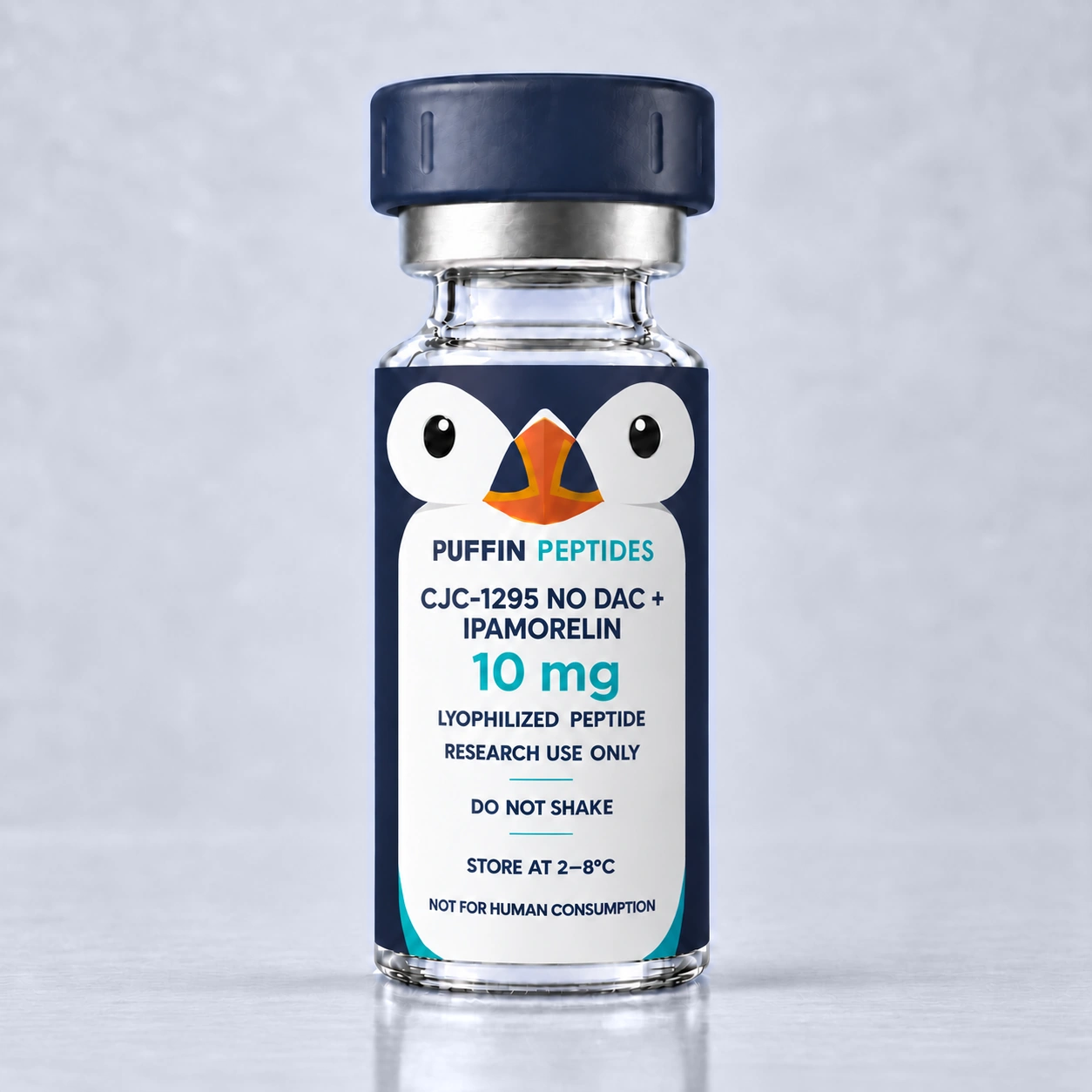
Vote For CJC-1295 NO DAC + IPAMORELIN
This compound is not currently stocked. Add it to your five-choice catalogue ballot.