
At A Glance
- HGH Fragment 176–191 is a short section from the end of human growth hormone. Researchers study it to ask whether a small region carries fat-metabolism-related activity of its own.
- Cell and animal experiments explored a possible separable metabolic role for the C terminus.
- HGH Fragment 176–191, AOD-9604, and somatropin are different materials.
What Is FRAG HGH 176-191?
HGH Fragment 176–191 is a short section from the end of human growth hormone. Researchers study it to ask whether a small region carries fat-metabolism-related activity of its own.
The fragment contains 16 amino acids from the C-terminal end of HGH. Preclinical work explored whether this region could contribute to lipid-related responses separately from the full hormone’s growth programme.
Why Study A Fragment Instead Of The Full Hormone?
It is a way to take a larger biological story apart. By examining one piece, scientists can ask which activities depend on that region and which require the full structure.
How Is It Different From AOD-9604?
AOD-9604 is a modified analogue based on the region, while Fragment 176–191 is the unmodified segment. Full HGH is a much larger protein. Keeping those three identities separate is the clearest starting point for reading their studies.
A Closer Look At FRAG HGH 176-191
Here are the key observations and the context that helps explain them. The original sources are linked below if you would like to explore further.
| Study or context | What was explored | What it tells us | Useful context |
|---|---|---|---|
| Preclinical work | A lipid-related region | Cell and animal experiments explored a possible separable metabolic role for the C terminus. | The exact sequence defines which fragment was tested. |
| Identity | Fragment, modified analogue, and full hormone | HGH Fragment 176–191, AOD-9604, and somatropin are different materials. | Their study results should stay attached to those identities. |
Common Questions About FRAG HGH 176-191
What is FRAG HGH 176-191?+
HGH Fragment 176–191 is a short section from the end of human growth hormone. Researchers study it to ask whether a small region carries fat-metabolism-related activity of its own.
Why study a fragment instead of the full hormone?+
It is a way to take a larger biological story apart. By examining one piece, scientists can ask which activities depend on that region and which require the full structure.
How is it different from AOD-9604?+
AOD-9604 is a modified analogue based on the region, while Fragment 176–191 is the unmodified segment. Full HGH is a much larger protein. Keeping those three identities separate is the clearest starting point for reading their studies.
Sources
Want to go a little deeper? These links take you to the studies and official records behind the guide. Study registries describe the plan; published papers report the findings.
- Antilipogenic action of synthetic human-growth-hormone C-terminal sequence 177–191PubMed-indexed preclinical study · 1993
Primary preclinical work on a C-terminal fragment. It does not establish a safe or effective human therapy and should not be conflated with the modified AOD9604 sequence.
- Think twice before injecting peptides bought online: unauthorized products can seriously harm youHealth Canada · 2026
For FRAG HGH 176-191 context, this official Canadian advisory explains why a research-use label does not establish authorization, safety, efficacy, or product quality for human use.
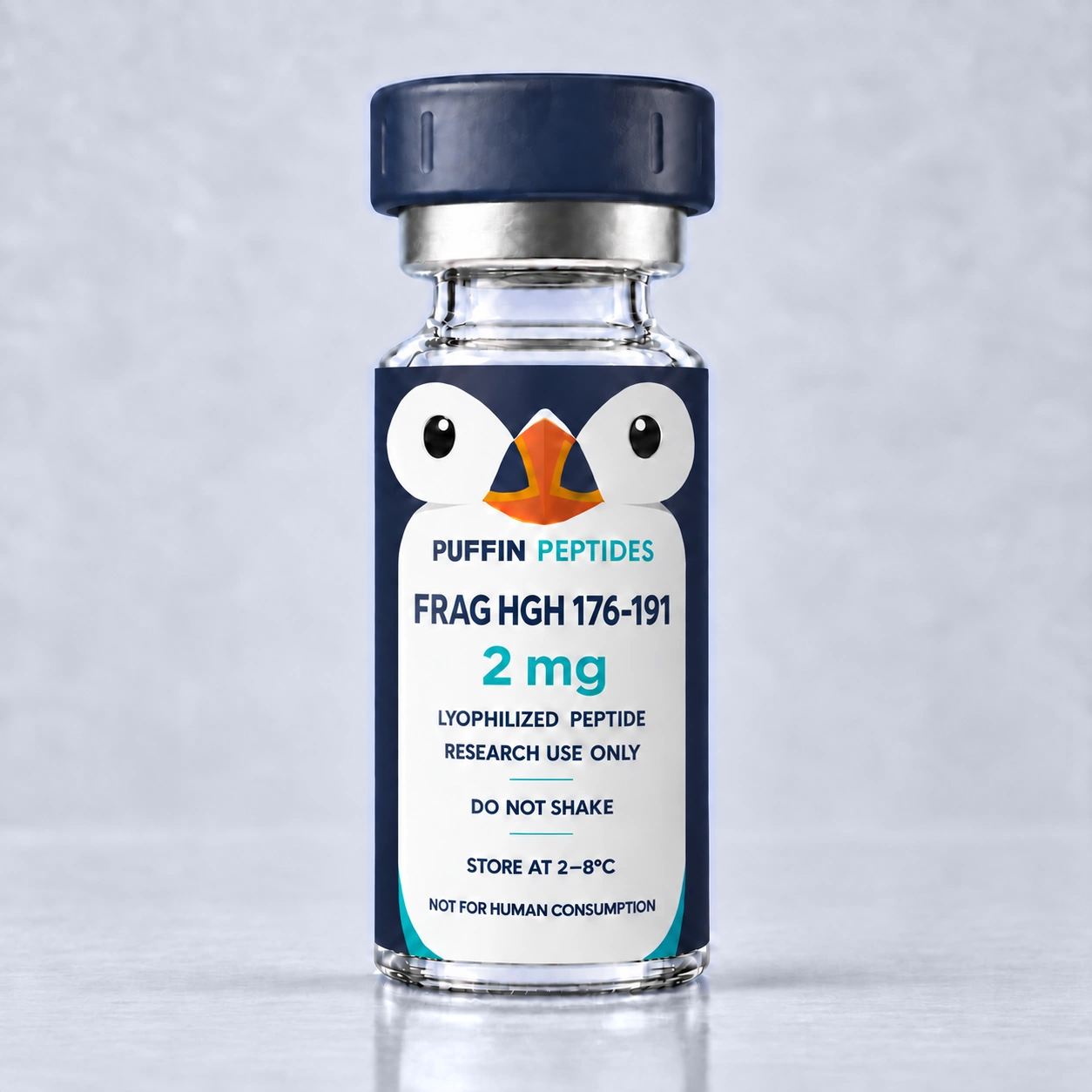
Vote For FRAG HGH 176-191
This compound is not currently stocked. Add it to your five-choice catalogue ballot.