
At A Glance
- KPV is a three-amino-acid fragment from a larger hormone called alpha-MSH. It is studied in gut, skin, and inflammatory-response models, which explains why those topics often appear together.
- The 2008 work reported transporter-related uptake and reduced inflammatory responses in intestinal models.
- KPV is explored through inflammatory signals and transport mechanisms.
What Is KPV?
KPV is a three-amino-acid fragment from a larger hormone called alpha-MSH. It is studied in gut, skin, and inflammatory-response models, which explains why those topics often appear together.
Research has explored changes in cytokines and NF-kappaB-related activity, part of the machinery that helps organize inflammation. In intestinal models, a transporter called PepT1 has also been studied as a route for KPV uptake.
Why Does KPV Get Called A Gut Peptide?
One well-known study examined uptake and inflammatory responses in intestinal cells and mice. That gives the gut connection a clear starting point. The broader interest concerns inflammation-related signalling, which also leads to skin and epithelial research.
Is KPV The Same As The Full Alpha-MSH Hormone?
It is a small fragment rather than the whole hormone. Its research may involve uptake and signalling that differ from classic melanocortin-receptor activity. That is why direct KPV studies are more useful than borrowing every effect of alpha-MSH.
A Closer Look At KPV
Here are the key observations and the context that helps explain them. The original sources are linked below if you would like to explore further.
| Study or context | What was explored | What it tells us | Useful context |
|---|---|---|---|
| Cell and mouse research | Intestinal uptake | The 2008 work reported transporter-related uptake and reduced inflammatory responses in intestinal models. | These are preclinical gut findings. |
| Mechanism | A short fragment’s own activity | KPV is explored through inflammatory signals and transport mechanisms. | Its relationship to alpha-MSH does not mean it reproduces every action of the full hormone. |
Common Questions About KPV
What is KPV?+
KPV is a three-amino-acid fragment from a larger hormone called alpha-MSH. It is studied in gut, skin, and inflammatory-response models, which explains why those topics often appear together.
Why does KPV get called a gut peptide?+
One well-known study examined uptake and inflammatory responses in intestinal cells and mice. That gives the gut connection a clear starting point. The broader interest concerns inflammation-related signalling, which also leads to skin and epithelial research.
Is KPV the same as the full alpha-MSH hormone?+
It is a small fragment rather than the whole hormone. Its research may involve uptake and signalling that differ from classic melanocortin-receptor activity. That is why direct KPV studies are more useful than borrowing every effect of alpha-MSH.
Sources
Want to go a little deeper? These links take you to the studies and official records behind the guide. Study registries describe the plan; published papers report the findings.
- PepT1-mediated tripeptide KPV uptake reduces intestinal inflammationGastroenterology · 2008
Cell and animal intestinal-inflammation models; not a controlled human efficacy trial.
- Think twice before injecting peptides bought online: unauthorized products can seriously harm youHealth Canada · 2026
For KPV context, this official Canadian advisory explains why a research-use label does not establish authorization, safety, efficacy, or product quality for human use.
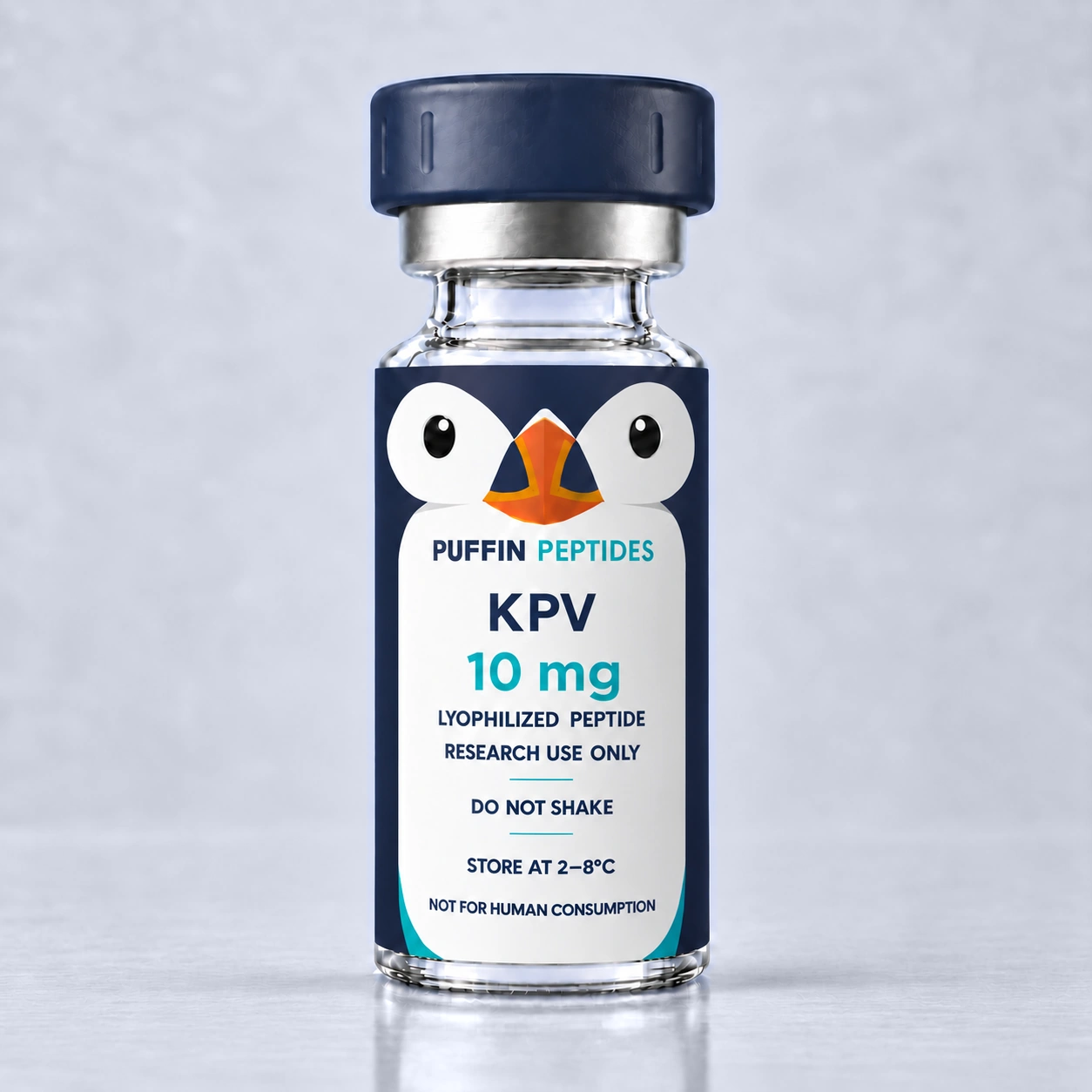
Explore KPV
Review available strengths, pricing, stock status, and product documentation.