
At A Glance
- MOTS-C is a small peptide linked to mitochondrial biology. It is studied as a signal connecting cellular stress, nutrient handling, and muscle adaptation—the reason it appears in both metabolic and endurance conversations.
- The study reported improved glucose handling and resistance to diet-related metabolic dysfunction in mice.
- Later work reported exercise-related and physical-capacity findings in mice.
What Is MOTS-C?
MOTS-C is a small peptide linked to mitochondrial biology. It is studied as a signal connecting cellular stress, nutrient handling, and muscle adaptation—the reason it appears in both metabolic and endurance conversations.
Early work links MOTS-C with energy-sensitive pathways, including AMPK, and with movement into the cell nucleus during stress. The interesting idea is communication: mitochondrial biology helping influence how the rest of the cell responds.
Why Does MOTS-C Get Attention Around Exercise?
Mouse studies have reported changes in glucose handling and physical capacity. Later research connected MOTS-C with exercise response and age-related muscle function. These findings give scientists a concrete way to explore how energy signals and adaptation interact.
How Is MOTS-C Different From SS-31 Or NAD+?
MOTS-C is studied as a metabolic message. SS-31 focuses on mitochondrial membrane organization, while NAD+ participates in cellular reactions. All three connect with energy, but they are doing different jobs in the research picture.
A Closer Look At MOTS-C
Here are the key observations and the context that helps explain them. The original sources are linked below if you would like to explore further.
| Study or context | What was explored | What it tells us | Useful context |
|---|---|---|---|
| Mouse metabolism | The 2015 discovery work | The study reported improved glucose handling and resistance to diet-related metabolic dysfunction in mice. | This established a research direction for the native peptide. |
| Exercise-related research | Physical capacity and age | Later work reported exercise-related and physical-capacity findings in mice. | The linked paper’s species and experiments matter; modified analogues are separate materials. |
Common Questions About MOTS-C
What is MOTS-C?+
MOTS-C is a small peptide linked to mitochondrial biology. It is studied as a signal connecting cellular stress, nutrient handling, and muscle adaptation—the reason it appears in both metabolic and endurance conversations.
Why does MOTS-C get attention around exercise?+
Mouse studies have reported changes in glucose handling and physical capacity. Later research connected MOTS-C with exercise response and age-related muscle function. These findings give scientists a concrete way to explore how energy signals and adaptation interact.
How is MOTS-C different from SS-31 or NAD+?+
MOTS-C is studied as a metabolic message. SS-31 focuses on mitochondrial membrane organization, while NAD+ participates in cellular reactions. All three connect with energy, but they are doing different jobs in the research picture.
Sources
Want to go a little deeper? These links take you to the studies and official records behind the guide. Study registries describe the plan; published papers report the findings.
- The mitochondrial-derived peptide MOTS-c promotes metabolic homeostasisPeer-reviewed publication · 2015
The 2015 discovery paper reported improved glucose handling and resistance to diet-induced metabolic dysfunction in mouse models. It established a research pathway, not a proven human treatment.
- MOTS-c and age-dependent physical decline and muscle homeostasisPeer-reviewed publication · 2021
Subsequent work linked MOTS-c with exercise response and age-dependent physical capacity in mice. Species, exposure, and outcome differences limit direct human inference.
- Think twice before injecting peptides bought online: unauthorized products can seriously harm youHealth Canada · 2026
For MOTS-C context, this official Canadian advisory explains why a research-use label does not establish authorization, safety, efficacy, or product quality for human use.
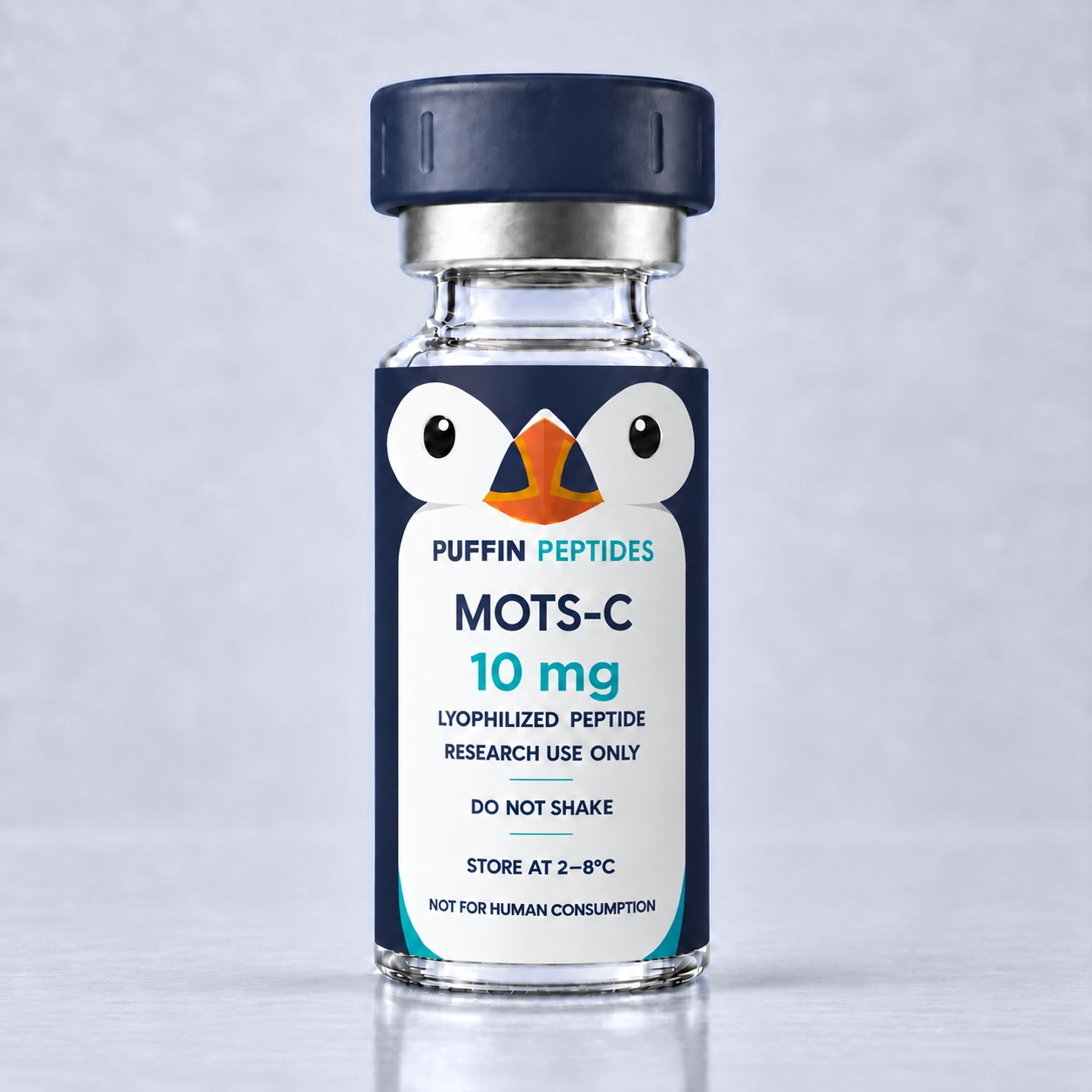
Explore MOTS-C
Review available strengths, pricing, stock status, and product documentation.