
At A Glance
- Oxytocin is a small hormone with several jobs. It is well known for reproductive functions and milk ejection, while its role in social and stress-related research gives it the familiar “bonding hormone” nickname.
- Oxytocin’s roles in uterine contraction and milk ejection are well characterized.
- Studies explore changes in social processing and behaviour, with variable results.
What Is OXYTOCIN?
Oxytocin is a small hormone with several jobs. It is well known for reproductive functions and milk ejection, while its role in social and stress-related research gives it the familiar “bonding hormone” nickname.
Its receptor can produce different responses in different tissues. Hormonal setting, receptor levels, and timing all play a part. The same molecule can therefore mean something quite different in reproductive tissue and a social-behaviour experiment.
Why Is The Nickname Only Part Of The Story?
It is memorable, but social behaviour is shaped by context. Research explores how oxytocin affects attention to social information and responses in particular situations, rather than a universal increase in trust or closeness.
Why Do Study Settings Matter So Much?
A reproductive-physiology study and an intranasal social-behaviour study are asking very different questions. Following the route, population, and outcome helps you understand which part of the oxytocin story a paper is telling.
A Closer Look At OXYTOCIN
Here are the key observations and the context that helps explain them. The original sources are linked below if you would like to explore further.
| Study or context | What was explored | What it tells us | Useful context |
|---|---|---|---|
| Established physiology | Reproductive actions | Oxytocin’s roles in uterine contraction and milk ejection are well characterized. | Those findings concern specific physiological functions. |
| Behavioural research | Social context and responses | Studies explore changes in social processing and behaviour, with variable results. | Population, setting, and the outcome measured help explain that variation. |
Common Questions About OXYTOCIN
What is OXYTOCIN?+
Oxytocin is a small hormone with several jobs. It is well known for reproductive functions and milk ejection, while its role in social and stress-related research gives it the familiar “bonding hormone” nickname.
Why is the nickname only part of the story?+
It is memorable, but social behaviour is shaped by context. Research explores how oxytocin affects attention to social information and responses in particular situations, rather than a universal increase in trust or closeness.
Why do study settings matter so much?+
A reproductive-physiology study and an intranasal social-behaviour study are asking very different questions. Following the route, population, and outcome helps you understand which part of the oxytocin story a paper is telling.
Sources
Want to go a little deeper? These links take you to the studies and official records behind the guide. Study registries describe the plan; published papers report the findings.
- Pitocin (oxytocin) official prescribing informationDailyMed · U.S. National Library of Medicine · Current label
Official label for a regulated oxytocin formulation and established peripheral indications. It is not evidence for simplified behavioural claims or for a separate research vial.
- Think twice before injecting peptides bought online: unauthorized products can seriously harm youHealth Canada · 2026
For OXYTOCIN context, this official Canadian advisory explains why a research-use label does not establish authorization, safety, efficacy, or product quality for human use.
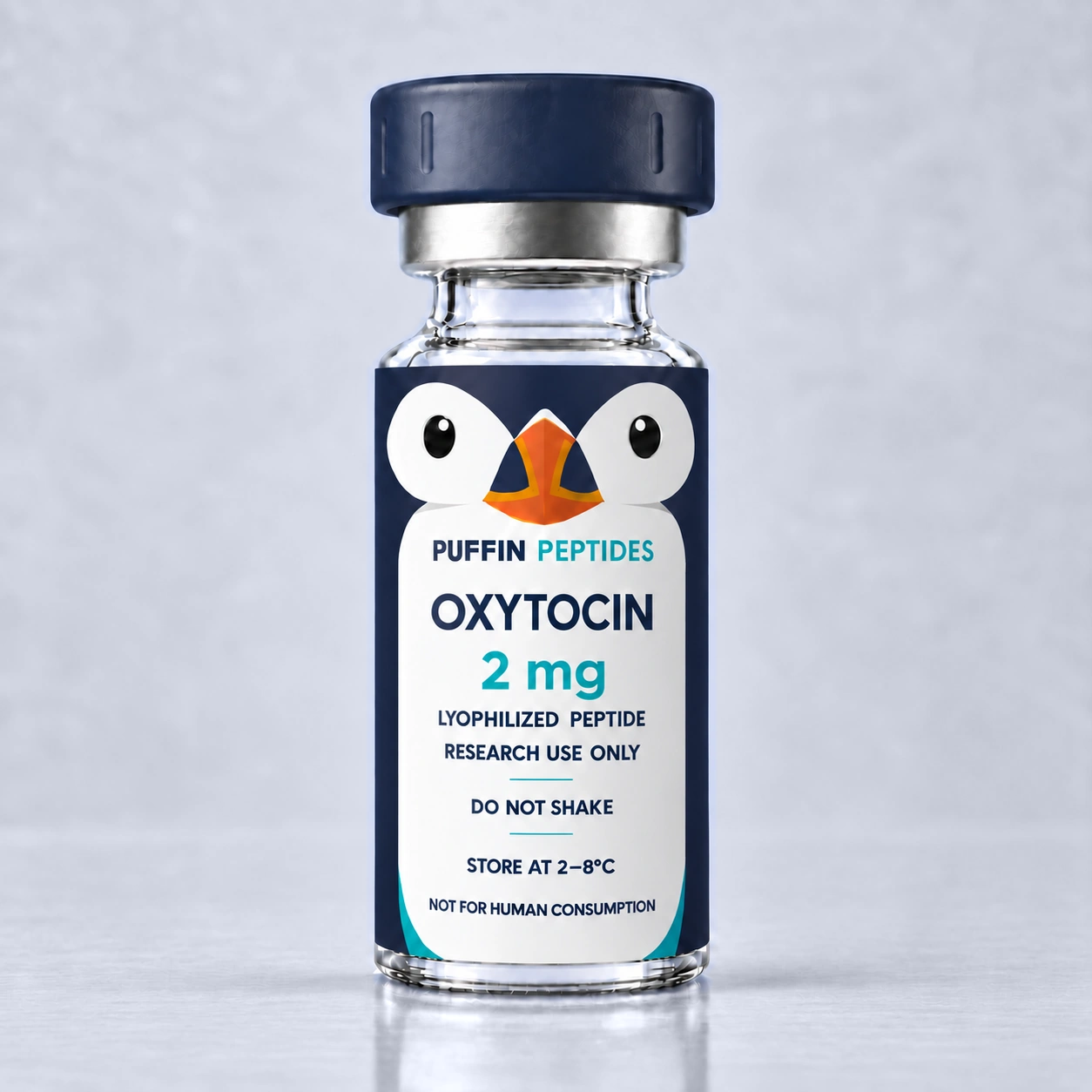
Vote For OXYTOCIN
This compound is not currently stocked. Add it to your five-choice catalogue ballot.