
At A Glance
- PT-141 is the development name for bremelanotide. It is studied through melanocortin signalling in the nervous system, giving it a different angle from compounds focused directly on blood flow.
- The linked record covers bremelanotide for acquired, generalized hypoactive sexual desire disorder in premenopausal women.
- PT-141 engages a different pathway from common blood-flow-focused drugs.
What Is PT-141?
PT-141 is the development name for bremelanotide. It is studied through melanocortin signalling in the nervous system, giving it a different angle from compounds focused directly on blood flow.
It activates melanocortin receptors, with particular interest in MC4-related pathways. Those pathways connect with upstream signals involved in sexual response. The mechanism is not the same as the nitric-oxide-related pathway used by PDE5 inhibitors.
Why Does The Difference In Pathway Matter?
Similar everyday topics can involve quite different biology. PT-141 gives researchers a way to examine the neural signalling side rather than assuming every compound in the conversation works through vascular relaxation.
What Is The Connection Between PT-141 And Vyleesi?
Bremelanotide is the active ingredient in Vyleesi, a regulated prescription formulation reviewed for a specific low-desire disorder in premenopausal women. That is a defined clinical context, while an independently labelled research vial is a separate material.
A Closer Look At PT-141
Here are the key observations and the context that helps explain them. The original sources are linked below if you would like to explore further.
| Study or context | What was explored | What it tells us | Useful context |
|---|---|---|---|
| Clinical product | The Vyleesi review | The linked record covers bremelanotide for acquired, generalized hypoactive sexual desire disorder in premenopausal women. | The population and formulation are specific. |
| Mechanism | Central melanocortin signalling | PT-141 engages a different pathway from common blood-flow-focused drugs. | A shared consumer topic does not imply matching pharmacology. |
Common Questions About PT-141
What is PT-141?+
PT-141 is the development name for bremelanotide. It is studied through melanocortin signalling in the nervous system, giving it a different angle from compounds focused directly on blood flow.
Why does the difference in pathway matter?+
Similar everyday topics can involve quite different biology. PT-141 gives researchers a way to examine the neural signalling side rather than assuming every compound in the conversation works through vascular relaxation.
What is the connection between PT-141 and Vyleesi?+
Bremelanotide is the active ingredient in Vyleesi, a regulated prescription formulation reviewed for a specific low-desire disorder in premenopausal women. That is a defined clinical context, while an independently labelled research vial is a separate material.
Sources
Want to go a little deeper? These links take you to the studies and official records behind the guide. Study registries describe the plan; published papers report the findings.
- the official FDA application recordU.S. Food and Drug Administration · Linked record
Vyleesi was reviewed as a defined prescription formulation for acquired, generalized hypoactive sexual desire disorder in premenopausal women. That is not a general approval for sexual performance or for research vials.
- Think twice before injecting peptides bought online: unauthorized products can seriously harm youHealth Canada · 2026
For PT-141 context, this official Canadian advisory explains why a research-use label does not establish authorization, safety, efficacy, or product quality for human use.
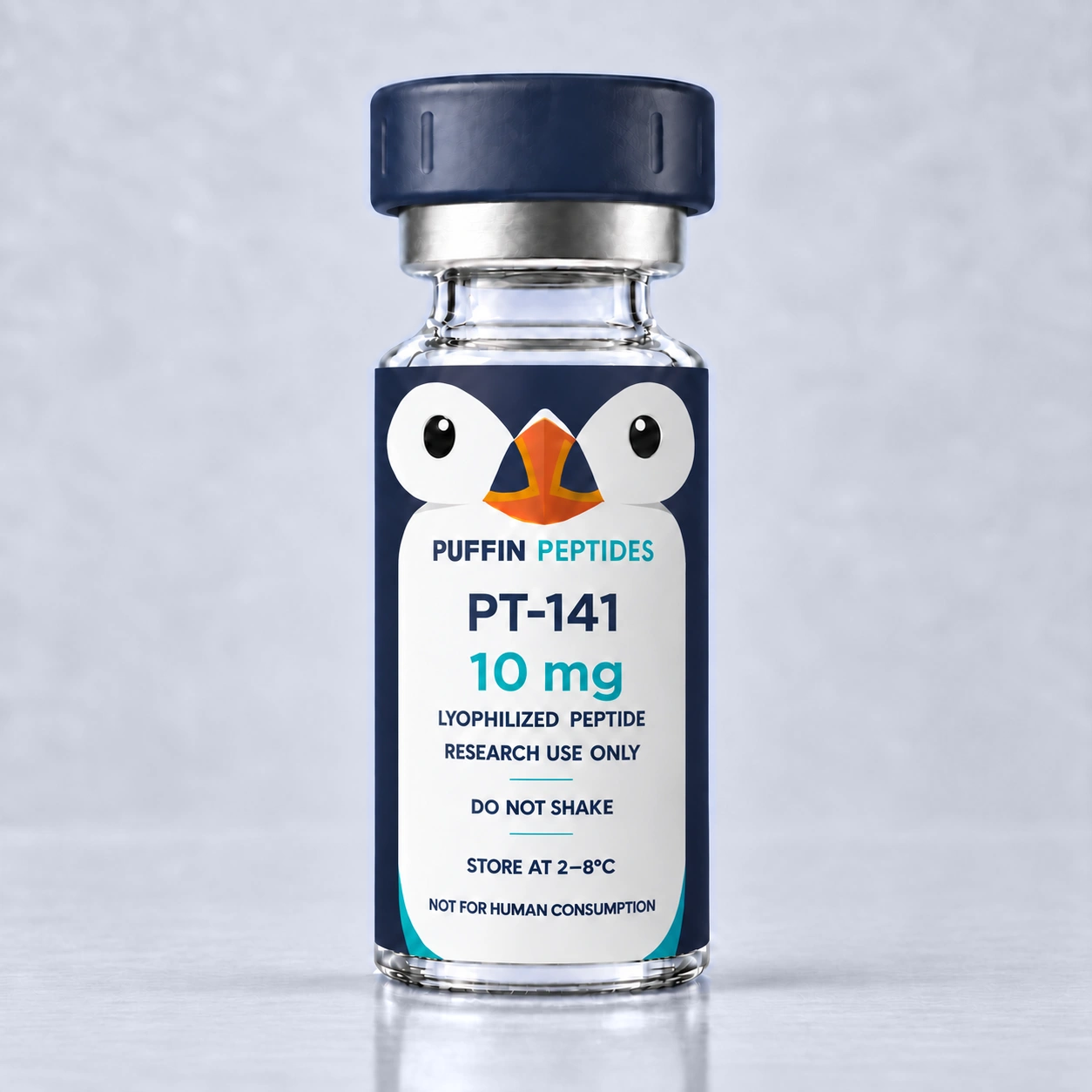
Vote For PT-141
This compound is not currently stocked. Add it to your five-choice catalogue ballot.