Skip to content
Every Peptide Explained & Sourced
Recovery Research

BPC-157

5.0ReviewsRead more

Built around the body’s natural repair processes, BPC-157 is a research peptide often associated with recovery, tissue support, and physical resilience. It is commonly explored for its potential role in supporting muscles, tendons, ligaments, and the digestive system—making it a standout option for those focused on faster recovery and long-term performance.

Batch details included Manufactured in Canada
$66 CADCAD · shipping and taxes shown at checkout

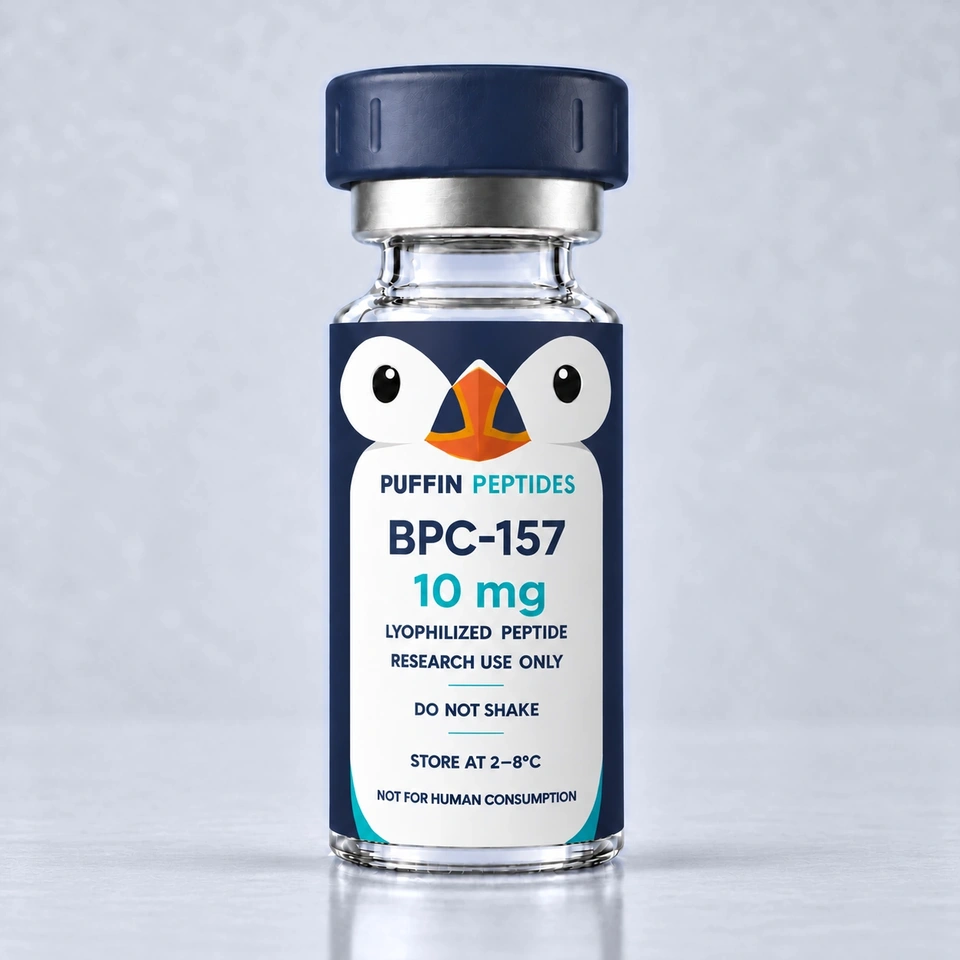
BPC-157 is supplied as 10 mg of lyophilized powder in a sealed glass vial for laboratory research. Confirm the selected vial and batch details before preparation.

Selected strength10 mg
Purity99.12%
TestingHPLC-UV
BatchPP-LOT-006
+ Show Scientific Details− Hide Scientific Details
CAS number137525-51-0
Compound classSynthetic pentadecapeptide
Peptide length15 amino acids
SequenceGEPPPGKPADDAGLV
Molecular formulaC62H98N16O22
Molecular weight1419.5 g/mol
Research themesTissue-response · Gastrointestinal · Angiogenesis / repair models
Scientific profile

BPC-157 is a synthetic 15-amino-acid peptide with the sequence GEPPPGKPADDAGLV. Its published research is predominantly preclinical and spans gastrointestinal, connective-tissue and wound-response models.

Product guide

BPC-157 Explained

A clear, quick look at what BPC-157 is, how it works, and why it is being studied.

What is BPC-157 supposed to help with?

BPC-157 is best known for recovery. People look into it when sore tendons, muscles, joints, or an irritated gut are keeping them from feeling and moving like themselves.

Research Context

BPC-157 is a synthetic 15-amino-acid peptide studied mainly in animal and laboratory models involving gastrointestinal injury, tendon/ligament healing, muscle injury, angiogenesis and related repair pathways. Broad human recovery claims are not established by large randomized clinical trials. [1]

Why is it so popular with active people?

Training is easy to enjoy until something aches every time you move. BPC-157 attracts active people because its research centres on how stressed or damaged tissue protects itself and repairs.

Research Context

Preclinical studies report effects involving tendon-to-bone healing, fibroblast activity, vascular signalling and tissue response after injury. Those mechanisms explain research interest, but popularity among athletes is not evidence of clinical efficacy. [1]

What does ‘tissue repair’ mean in plain English?

It means helping the body rebuild the tiny structures that become irritated or damaged. Think of supporting the repair crew after wear, strain, or injury—not simply covering up the warning light.

Research Context

Tissue repair coordinates inflammation, cell migration, extracellular-matrix production, vascular responses and remodelling. BPC-157 research touches several of these processes in experimental models. [1]

Is BPC-157 mainly for tendons and joints?

Those are major reasons people find it, especially when a stubborn area will not settle down. Its recovery reputation also includes muscles, ligaments, and other soft tissue.

Research Context

Tendon and ligament models are prominent, but published preclinical work also includes gastrointestinal, muscle, bone, vascular and nervous-system models. The breadth of experimental models is greater than the breadth of high-quality human evidence. [1]

Why do people discuss BPC-157 for the gut?

The gut lining is tissue too, and it deals with constant irritation and repair. Early research connecting BPC-157 with the stomach and intestinal lining is why gut comfort is part of its story.

Research Context

BPC-157 emerged from research around gastric peptides and has been studied extensively in animal models of gastrointestinal lesions and mucosal protection. Translation to specific human gastrointestinal benefits remains uncertain. [1]

Does BPC-157 make you feel stronger?

It is not a stimulant or muscle builder. The appeal is better recovery: if irritated tissue settles and moves more comfortably, getting back to normal activity may feel easier.

Research Context

BPC-157 is not established as a stimulant or direct anabolic agent. Any proposed performance relevance is indirect through experimental tissue-repair effects rather than evidence of an acute strength increase in healthy people. [1]

How is BPC-157 different from TB-500?

BPC-157 is often discussed as focused repair support, including tendons and the gut. TB-500 has a broader connection to cell movement, flexibility, and repair across soft tissue.

Research Context

The research overlaps around repair, but the molecules are different. Thymosin-beta-4 biology is strongly tied to actin binding, cell migration and angiogenesis, while BPC-157 literature spans gastrointestinal protection and multiple injury models. Neither distinction proves clinical superiority. [1]

Why choose BPC-157 instead of a recovery blend?

BPC-157 keeps things simple and focused on one well-known recovery peptide. Blends such as Wolverine add TB-500 for people interested in covering recovery from another angle too.

Research Context

A single-compound design makes experimental observations easier to attribute to one molecule. A blend can have a plausible mechanistic rationale without direct evidence that the combination is additive or synergistic. [1]

Read the full BPC-157 evidence guideStudy design, primary sources, limitations, and unanswered questions.Open guide
Research-use statement

This product is offered for laboratory research only. It is not for human consumption and is not represented as a medicine, treatment, supplement or substitute for an approved product.

Preparation guide

Calculate. Prepare. Store.

Confirm the selected vial and BAC-water amount, enter the target amount, then follow the preparation and storage steps.

Step 1: Calculate

The selected strength automatically opens with the easy starting rule of 100 mcg = 1 unit.

BPC-157 · 10 mg selected

Vial Strength
10mg

Easy rule: 100 mcg = 1 unit · Every 1 unit = 100 mcg

Calculated result
U-100 syringe—Enter the target mcg amount

This calculator converts the values entered. It does not choose an amount.

Step 2: Prepare

This 10 mg vial opens with 1 mL of BAC water, creating the easy starting rule of 100 mcg = 1 unit.

If the water amount is changed above, use the updated easy rule shown by the calculator.

Do not shake the vialSlowly add the water down the inside wall of the vial, then gently swirl until fully dissolved.

Step 3: Store

Prepared vialsRefrigerate at 2–8°C

Unprepared vialsKeep cool and dry, away from heat, moisture, and direct sunlight

Shipping & delivery

Picked And Shipped Within 24 Hours.

Every order is prepared and packed in Canada with care, accuracy, and attention to detail. In-stock orders are checked and packed within 24 hours, then shipped with Canada Post. Tracking is sent after the parcel’s first carrier scan.

Bilingual Shipped by Canada Post logo with English to the left and French to the right

Customer Reviews

5.0★★★★★

2 customer reviews

Share your experience

Reviews are checked before publication. Your email is never displayed.

2 reviewsShowing 2
Lacey HughesVerified buyer
★★★★★
Puffin Peptides

Nice site and helpful chat bot. I’ll be back again.

Kimmy SonnVerified buyer
★★★★★
Puffin Peptides

I can’t believe it but I’ve lost 30lb. It’s been 3 months and felt compelled to write a review. I know it’s not Puffin I have to thank but their site came up in google and brought me here. Thank youuuuuu! <3

Reviews

There are no reviews yet.

Only logged in customers who have purchased this product may leave a review.

Product documentation

Batch Details

Uploaded documents10 mg
PDF · 10 mgPP-BPC-157-10-MG-R006.pdfPublished for BPC-157 10 mg
View document
ProductBPC-157
Strength10 mg
Catalogue codePP-BPC-157-10-MG
PresentationLyophilized powder in a sealed glass vial
StorageSee vial label and lot-specific documentation
Intended useLaboratory research only · not for human consumption

Only uploaded documents published for the selected vial strength are shown here.

Search the catalogue

What Are You Looking For?