
At A Glance
- Wolverine is the nickname for the BPC-157 and TB-500 pairing. It brings together two familiar names in tissue-response research, each approaching the subject from a somewhat different angle.
- BPC-157 and thymosin-related research provide the starting ideas for this pairing.
- Single-component comparisons help explain a response from the pair.
What Is Wolverine?
Wolverine is the nickname for the BPC-157 and TB-500 pairing. It brings together two familiar names in tissue-response research, each approaching the subject from a somewhat different angle.
BPC-157 has been explored in tendon, gut, and cell-migration models. TB-500 is connected to a short region of thymosin beta-4, whose broader biology includes actin and cell movement. That overlap explains why the two are often discussed together.
Why Pair BPC-157 With TB-500?
The research interest is whether different tissue-response signals might complement one another. To understand that properly, scientists compare each ingredient with the combination. Otherwise, it is hard to know which ingredient explains an observed change.
How Does Wolverine Compare With Glow?
Wolverine has BPC-157 and TB-500. Glow adds GHK-Cu, bringing copper-peptide and collagen-related research into the picture. The nickname is a useful shortcut for the ingredient list, while the studies below provide the more detailed background.
A Closer Look At Wolverine
Here are the key observations and the context that helps explain them. The original sources are linked below if you would like to explore further.
| Study or context | What was explored | What it tells us | Useful context |
|---|---|---|---|
| Component studies | Tissue response and cell movement | BPC-157 and thymosin-related research provide the starting ideas for this pairing. | Separate component papers do not directly test the premixed blend. |
| Combination question | Complementary effects or one leading ingredient? | Single-component comparisons help explain a response from the pair. | Synergy means a demonstrated interaction, not simply putting two peptides together. |
Common Questions About Wolverine (BPC-157 + TB-500)
What is Wolverine?+
Wolverine is the nickname for the BPC-157 and TB-500 pairing. It brings together two familiar names in tissue-response research, each approaching the subject from a somewhat different angle.
Why pair BPC-157 with TB-500?+
The research interest is whether different tissue-response signals might complement one another. To understand that properly, scientists compare each ingredient with the combination. Otherwise, it is hard to know which ingredient explains an observed change.
How does Wolverine compare with Glow?+
Wolverine has BPC-157 and TB-500. Glow adds GHK-Cu, bringing copper-peptide and collagen-related research into the picture. The nickname is a useful shortcut for the ingredient list, while the studies below provide the more detailed background.
Sources
Want to go a little deeper? These links take you to the studies and official records behind the guide. Study registries describe the plan; published papers report the findings.
- The promoting effect of pentadecapeptide BPC 157 on tendon healing involves tendon outgrowth, cell survival, and cell migrationJournal of Applied Physiology · 2011
Preclinical BPC-157 study; it did not test the Wolverine blend.
- The actin binding site on thymosin beta4 promotes angiogenesisFASEB Journal · 2003
Primary full-length thymosin beta-4 research. It is not a trial of TB-500 or the combined product.
- Think twice before injecting peptides bought online: unauthorized products can seriously harm youHealth Canada · 2026
For Wolverine (BPC-157 + TB-500) context, this official Canadian advisory explains why a research-use label does not establish authorization, safety, efficacy, or product quality for human use.
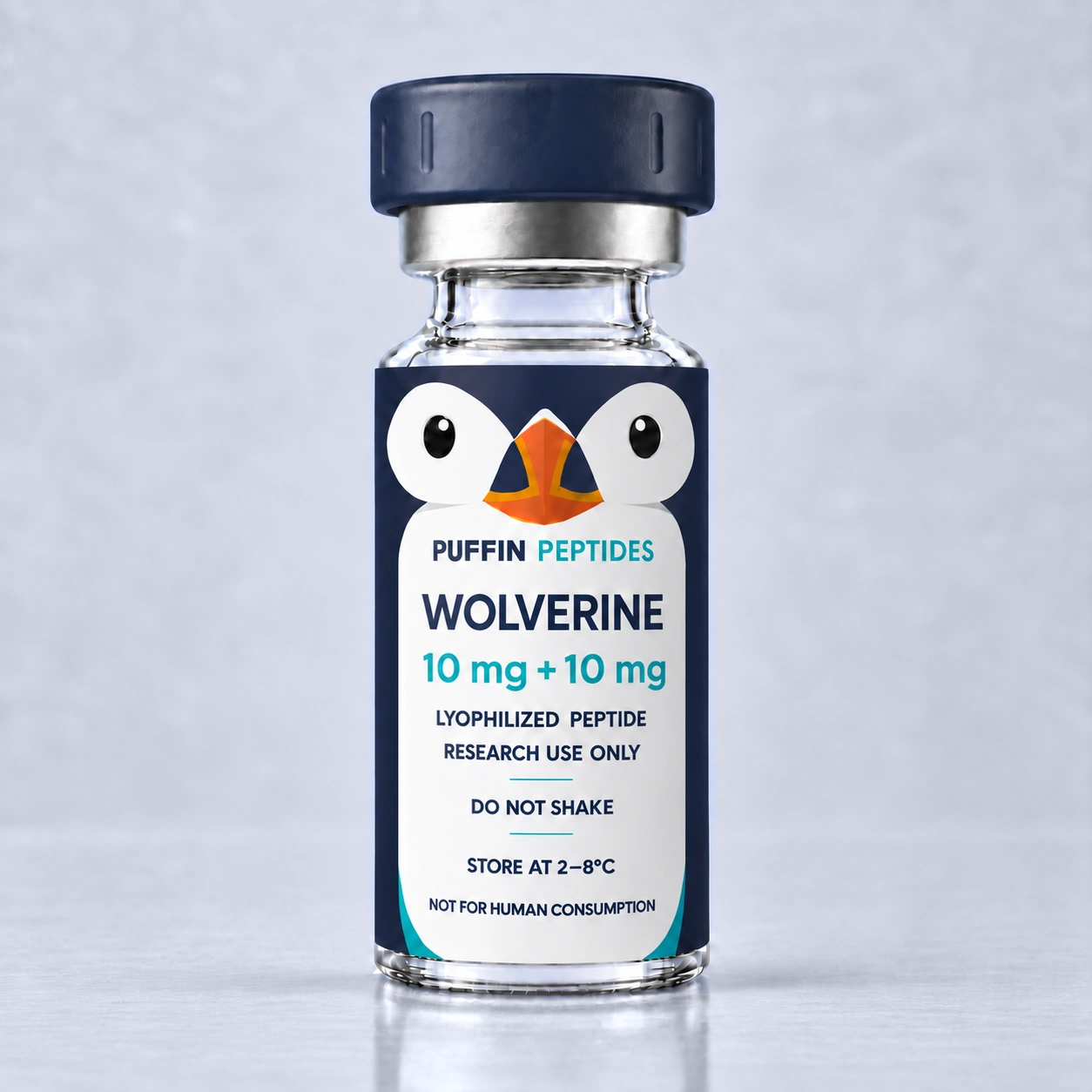
Explore WOLVERINE
Review available strengths, pricing, stock status, and product documentation.