
At A Glance
- Cerebrolysin is a mixture of small peptides and amino acids derived from porcine brain tissue. It draws interest in neurological research because scientists have explored its effects on cell survival and nerve-related responses.
- Randomized studies have examined the original formulation in stroke and other settings, with differing conclusions.
- Cell-survival, inflammatory, and nerve-growth pathways have been explored.
What Is CEREBROLYSIN?
Cerebrolysin is a mixture of small peptides and amino acids derived from porcine brain tissue. It draws interest in neurological research because scientists have explored its effects on cell survival and nerve-related responses.
Unlike a single defined peptide, the mixture has no one sequence or receptor that explains its whole proposed activity. Researchers have investigated several processes, including neurotrophic signalling—the signals that support nerve-cell growth and survival.
Why Does The Mixture Matter?
When a study examines a mixture, its manufacturing and composition are part of the experiment. The Cerebrolysin literature includes human neurological studies as well as laboratory work, so it is helpful to know both the formulation and the question being studied.
What Do The Clinical Studies Tell Us?
Results have differed across stroke and other neurological settings. The population, other care, and outcome measures help explain those differences. A nerve-cell survival finding and a change in a person’s day-to-day function are related questions, but each needs its own evidence.
A Closer Look At CEREBROLYSIN
Here are the key observations and the context that helps explain them. The original sources are linked below if you would like to explore further.
| Study or context | What was explored | What it tells us | Useful context |
|---|---|---|---|
| Human studies | Neurological outcomes | Randomized studies have examined the original formulation in stroke and other settings, with differing conclusions. | The linked trial concerns its defined population and treatment setting. |
| Mixture biology | Several possible signals | Cell-survival, inflammatory, and nerve-growth pathways have been explored. | The original formulation and another peptide mixture should not be assumed equivalent. |
Common Questions About CEREBROLYSIN
What is CEREBROLYSIN?+
Cerebrolysin is a mixture of small peptides and amino acids derived from porcine brain tissue. It draws interest in neurological research because scientists have explored its effects on cell survival and nerve-related responses.
Why does the mixture matter?+
When a study examines a mixture, its manufacturing and composition are part of the experiment. The Cerebrolysin literature includes human neurological studies as well as laboratory work, so it is helpful to know both the formulation and the question being studied.
What do the clinical studies tell us?+
Results have differed across stroke and other neurological settings. The population, other care, and outcome measures help explain those differences. A nerve-cell survival finding and a change in a person’s day-to-day function are related questions, but each needs its own evidence.
Sources
Want to go a little deeper? These links take you to the studies and official records behind the guide. Study registries describe the plan; published papers report the findings.
- the CASTA randomized stroke trialPeer-reviewed publication · Linked record
Randomized studies and systematic reviews have reached differing conclusions across acute stroke and other neurological settings. Population, co-treatment, outcome scale, and trial quality materially affect interpretation.
- Think twice before injecting peptides bought online: unauthorized products can seriously harm youHealth Canada · 2026
For CEREBROLYSIN context, this official Canadian advisory explains why a research-use label does not establish authorization, safety, efficacy, or product quality for human use.
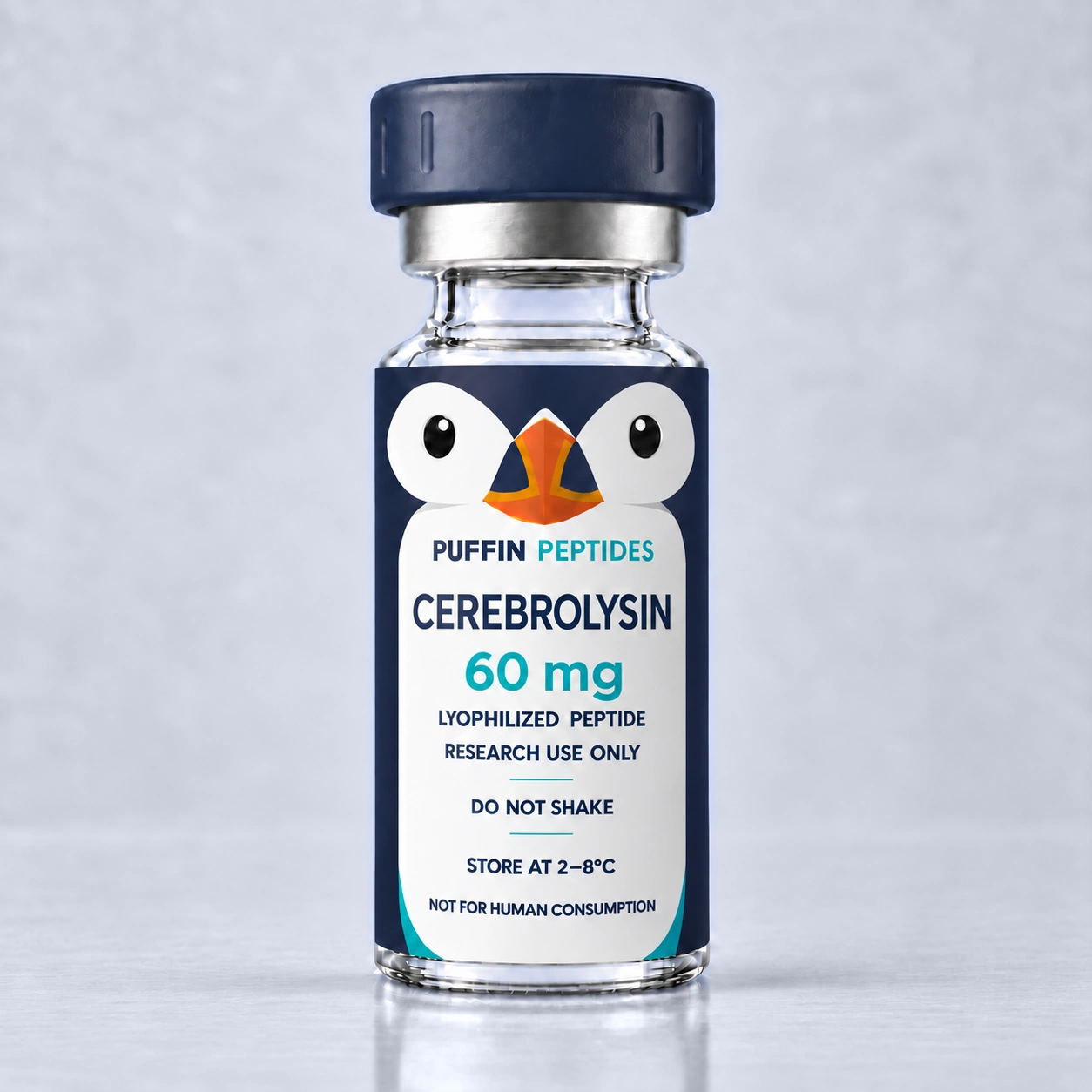
Vote For CEREBROLYSIN
This compound is not currently stocked. Add it to your five-choice catalogue ballot.