
At A Glance
- Gonadorelin is synthetic GnRH, the hormone that asks the pituitary to release LH and FSH. It is a small signal with an important place near the start of the reproductive hormone chain.
- GnRH timing influences LH and FSH release and receptor responsiveness.
- Gonadorelin asks the pituitary to release gonadotropins.
What Is GONADORELIN?
Gonadorelin is synthetic GnRH, the hormone that asks the pituitary to release LH and FSH. It is a small signal with an important place near the start of the reproductive hormone chain.
Timing is a big part of its biology. Pulses of GnRH can support hormone release, while sustained exposure can make the system less responsive. The same message can have a different effect depending on how it arrives.
Why Do Researchers Pay Attention To Pulses?
Hormone signalling is not only about what is present. It is also about rhythm. Gonadorelin makes that idea particularly clear because the pattern of exposure can change the pituitary’s response.
Where Does It Fit Beside Kisspeptin, HCG, And HMG?
Kisspeptin acts earlier by prompting GnRH neurons. Gonadorelin carries the GnRH message to the pituitary. HCG and HMG act farther down the chain. Mapping that order makes the names much easier to keep straight.
A Closer Look At GONADORELIN
Here are the key observations and the context that helps explain them. The original sources are linked below if you would like to explore further.
| Study or context | What was explored | What it tells us | Useful context |
|---|---|---|---|
| Reproductive physiology | Pulses versus sustained signalling | GnRH timing influences LH and FSH release and receptor responsiveness. | The exposure pattern is part of the mechanism. |
| Pathway map | An upstream pituitary signal | Gonadorelin asks the pituitary to release gonadotropins. | HCG and HMG work at different points in that chain. |
Common Questions About GONADORELIN
What is GONADORELIN?+
Gonadorelin is synthetic GnRH, the hormone that asks the pituitary to release LH and FSH. It is a small signal with an important place near the start of the reproductive hormone chain.
Why do researchers pay attention to pulses?+
Hormone signalling is not only about what is present. It is also about rhythm. Gonadorelin makes that idea particularly clear because the pattern of exposure can change the pituitary’s response.
Where does it fit beside kisspeptin, HCG, and HMG?+
Kisspeptin acts earlier by prompting GnRH neurons. Gonadorelin carries the GnRH message to the pituitary. HCG and HMG act farther down the chain. Mapping that order makes the names much easier to keep straight.
Sources
Want to go a little deeper? These links take you to the studies and official records behind the guide. Study registries describe the plan; published papers report the findings.
- Hormonal responses to low-dose pulsatile administration of gonadotropin-releasing hormoneJournal of Clinical Endocrinology & Metabolism · 1980
Small human physiology study showing that pulse pattern is part of the intervention. Its protocol and population cannot be generalized to every GnRH exposure.
- Think twice before injecting peptides bought online: unauthorized products can seriously harm youHealth Canada · 2026
For GONADORELIN context, this official Canadian advisory explains why a research-use label does not establish authorization, safety, efficacy, or product quality for human use.
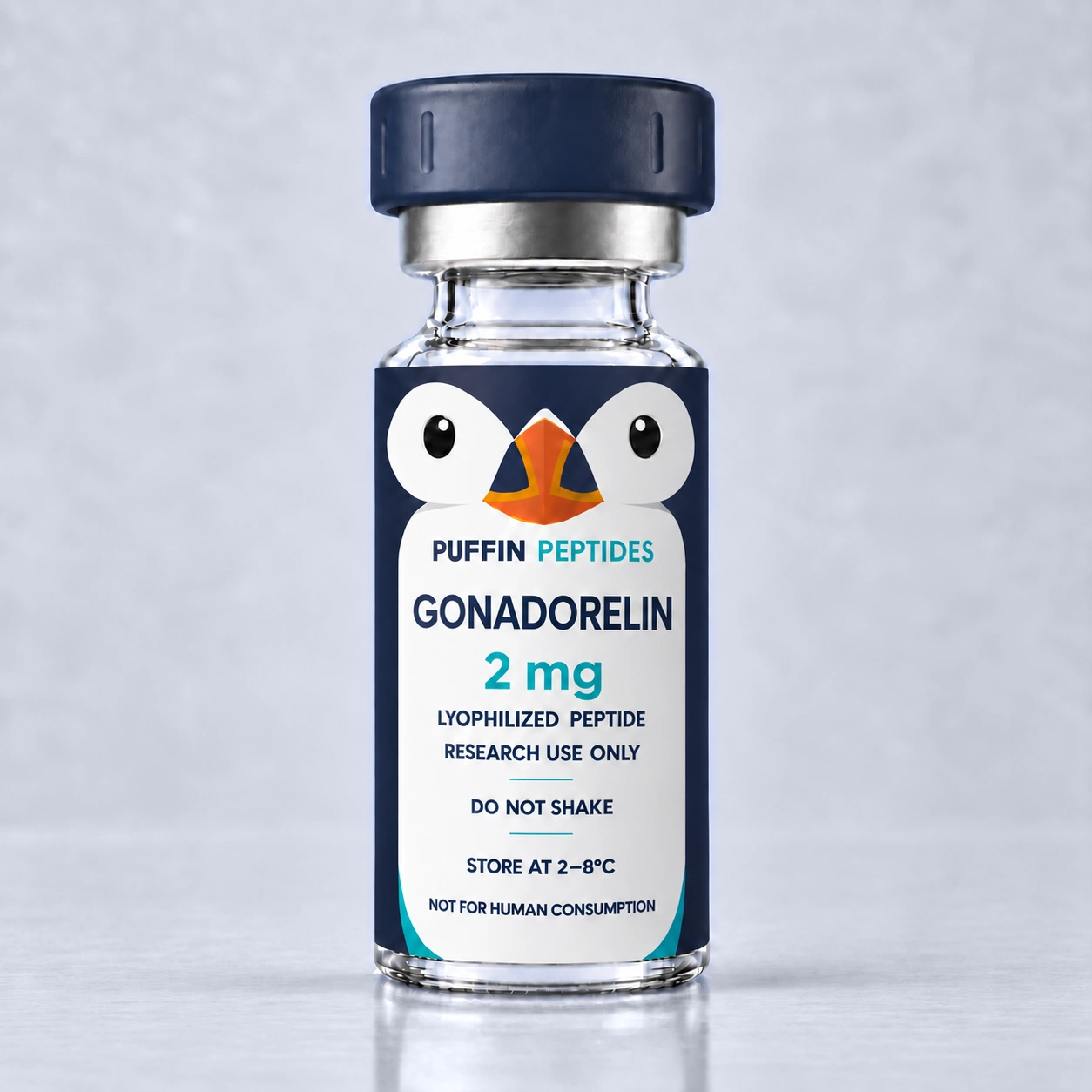
Vote For GONADORELIN
This compound is not currently stocked. Add it to your five-choice catalogue ballot.