
At A Glance
- Hyaluronic acid is a long sugar-based molecule known for holding water. It is part of the material around cells, which helps explain its familiar place in conversations about skin, hydration, and tissue texture.
- Research compares hyaluronic acid sizes to understand their effects on physical properties and inflammatory signalling.
- Hyaluronic acid contributes to the environment around cells.
What Is HYALURONIC ACID?
Hyaluronic acid is a long sugar-based molecule known for holding water. It is part of the material around cells, which helps explain its familiar place in conversations about skin, hydration, and tissue texture.
Its chains attract water and influence how that surrounding material behaves. Chain length also matters: a long polymer and a small fragment can send different signals. Despite appearing in this library, hyaluronic acid is a polysaccharide, not a peptide.
Why Is Molecular Size Such A Big Deal?
The name covers a range of sizes and forms. Larger chains, smaller fragments, and crosslinked gels can have different physical and biological properties. Looking at size helps turn a broad claim about hyaluronic acid into a much more useful explanation.
Is Every Hyaluronic Acid Product The Same?
No. A gel, a solution, and a defined research polymer can differ in size, concentration, and crosslinking. Clinical products also have their own formulation controls. Those details explain why a result belongs to the particular material being studied.
A Closer Look At HYALURONIC ACID
Here are the key observations and the context that helps explain them. The original sources are linked below if you would like to explore further.
| Study or context | What was explored | What it tells us | Useful context |
|---|---|---|---|
| Material comparison | Different chain lengths | Research compares hyaluronic acid sizes to understand their effects on physical properties and inflammatory signalling. | The linked study focuses on molecular-weight differences. |
| Chemistry | A water-binding sugar polymer | Hyaluronic acid contributes to the environment around cells. | Crosslinking and formulation change how that polymer behaves. |
Common Questions About HYALURONIC ACID
What is HYALURONIC ACID?+
Hyaluronic acid is a long sugar-based molecule known for holding water. It is part of the material around cells, which helps explain its familiar place in conversations about skin, hydration, and tissue texture.
Why is molecular size such a big deal?+
The name covers a range of sizes and forms. Larger chains, smaller fragments, and crosslinked gels can have different physical and biological properties. Looking at size helps turn a broad claim about hyaluronic acid into a much more useful explanation.
Is every hyaluronic acid product the same?+
No. A gel, a solution, and a defined research polymer can differ in size, concentration, and crosslinking. Clinical products also have their own formulation controls. Those details explain why a result belongs to the particular material being studied.
Sources
Want to go a little deeper? These links take you to the studies and official records behind the guide. Study registries describe the plan; published papers report the findings.
- Different molecular-weight hyaluronic acid effects on inflammatory responsesPubMed-indexed primary study · 2014
Primary comparison of hyaluronan molecular weights in experimental immune-response models. It supports the material-size distinction, not a route-independent clinical benefit.
- Think twice before injecting peptides bought online: unauthorized products can seriously harm youHealth Canada · 2026
For HYALURONIC ACID context, this official Canadian advisory explains why a research-use label does not establish authorization, safety, efficacy, or product quality for human use.
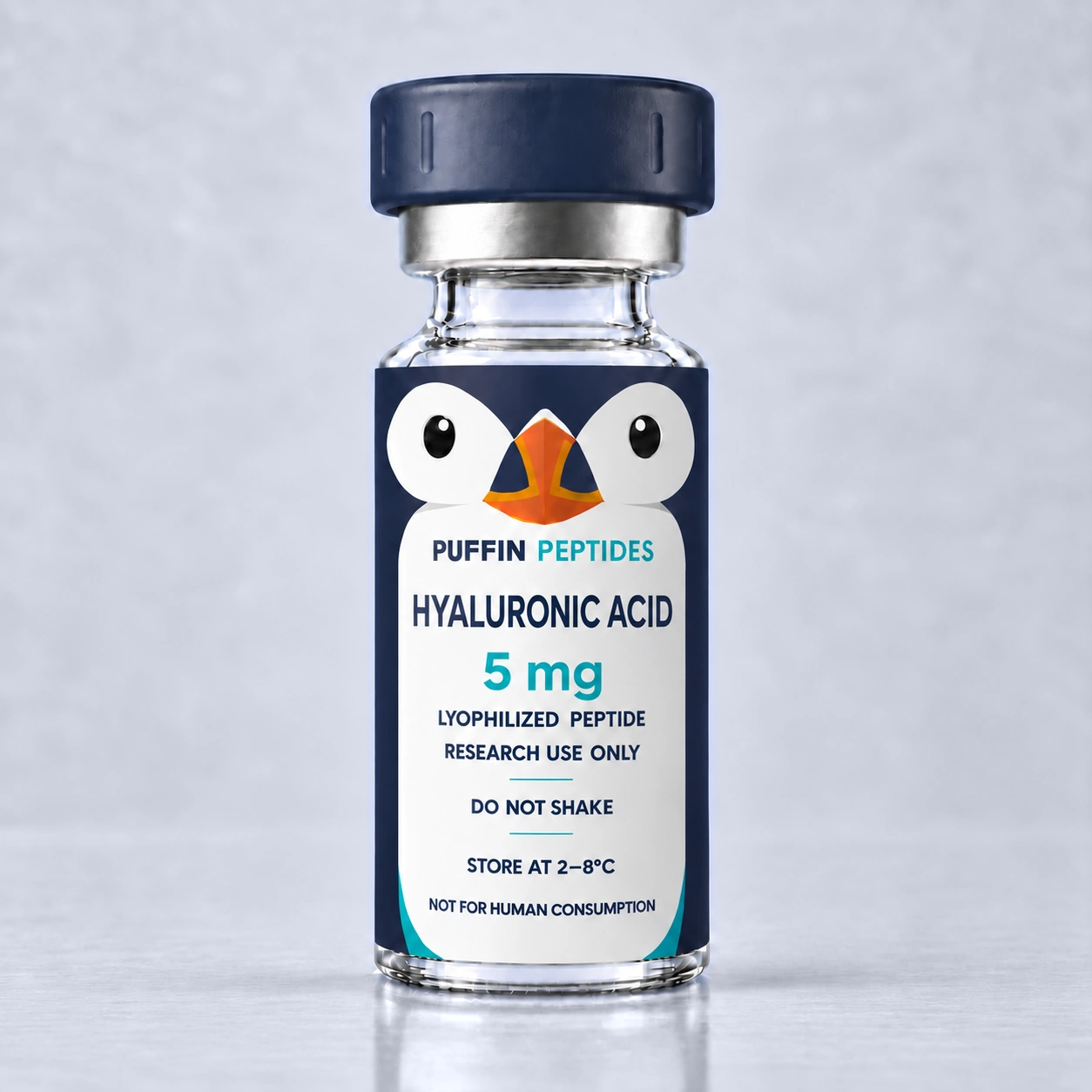
Vote For HYALURONIC ACID
This compound is not currently stocked. Add it to your five-choice catalogue ballot.