Skip to content
Every Peptide Explained & Sourced
Metabolic Research

SLU-PP-332

5.0ReviewsRead more

Train your metabolism from the inside out. SLU-PP-332 is an experimental “exercise-mimetic” compound designed to activate cellular pathways linked to endurance, fat burning, and energy use. Early animal research suggests it may increase calorie expenditure, improve metabolic efficiency, and support a leaner body composition—without being a peptide or a substitute for training.

Batch details included Manufactured in Canada
$171 CADCAD · shipping and taxes shown at checkout

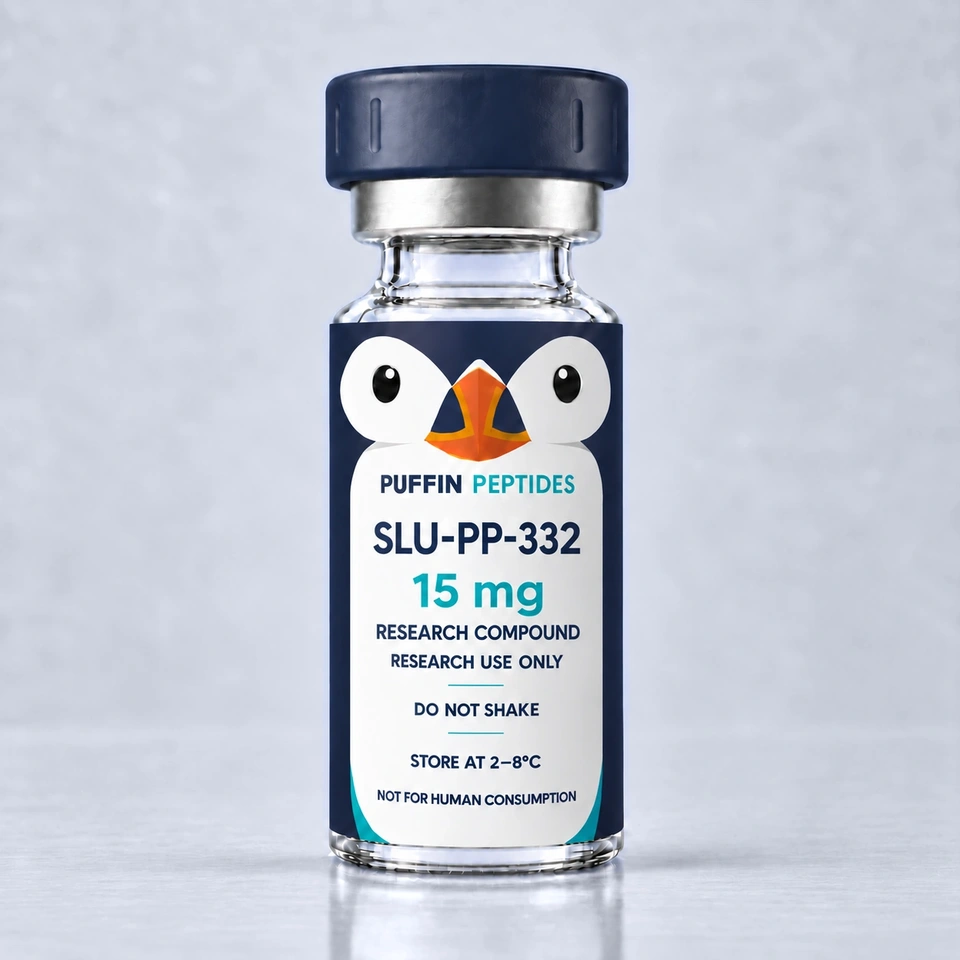
SLU-PP-332 is supplied as 15 mg of lyophilized powder in a sealed glass vial for laboratory research. Confirm the selected vial and batch details before preparation.

Selected strength15 mg
Purity99.37%
TestingHPLC-UV
BatchPP-LOT-035
+ Show Scientific Details− Hide Scientific Details
CAS number303760-60-3
Compound classSmall-molecule ERR pan-agonist — not a peptide
Chemical name4-hydroxy-N-[(E)-naphthalen-2-ylmethylideneamino]benzamide
Molecular formulaC18H14N2O2
Molecular weight290.3 g/mol
Primary targetsEstrogen-related receptors (ERRs)
Research themesOxidative metabolism · Mitochondrial/exercise-response signalling
Scientific profile

SLU-PP-332 is a synthetic small-molecule estrogen-related-receptor agonist studied in preclinical models of oxidative metabolism and exercise-responsive transcriptional programs.

Product guide

SLU-PP-332 Explained

A clear, quick look at what SLU-PP-332 is, how it works, and why it is being studied.

What is SLU-PP-332 supposed to help with?

SLU-PP-332 is best known for endurance, energy use, fat metabolism, and exercise-like changes in muscle. Its early research asks whether cells can be nudged toward a more trained state.

Research Context

SLU-PP-332 is a synthetic small-molecule pan agonist of estrogen-related receptors (ERRs), not a peptide. Preclinical research links ERR activation to mitochondrial metabolism, oxidative muscle programs and exercise capacity. [1–2]

Why is it called ‘exercise in a pill’?

In animal research, it switched on some of the same cellular programs activated by endurance exercise. The nickname describes that biology—it does not mean movement and training suddenly become unnecessary.

Research Context

The nickname comes from animal/cell findings showing activation of transcriptional programs that overlap with endurance exercise. It is media shorthand, not evidence that the compound reproduces the full physiological effects of exercise in humans. [1]

What could exercise-like changes mean?

Think of muscle cells becoming better prepared to use fuel for longer-lasting activity. The research interest is deeper endurance machinery, not the temporary rush of a pre-workout.

Research Context

ERR activation can alter mitochondrial function, oxidative-fibre programs and fatty-acid metabolism in skeletal muscle. Those are molecular adaptations, not a substitute for the cardiovascular, skeletal, neurological and behavioural effects of actual exercise. [1–2]

Can SLU-PP-332 improve endurance?

That is one of its biggest research themes. Animal studies found changes in exercise capacity and muscle energy use, which is why performance-minded people noticed it.

Research Context

Mouse studies reported enhanced exercise capacity after SLU-PP-332 exposure. Human efficacy and safety have not been established, so endurance claims should be explicitly labelled preclinical. [1]

Does SLU-PP-332 burn fat?

Fat metabolism is part of the interest because endurance-oriented muscle needs fuel. Early animal work connects it with energy use and body composition, but it is still highly experimental.

Research Context

Preclinical ERR-agonist work includes fatty-acid oxidation and adiposity-related findings, but there is no established human weight-loss evidence. “Fat burning” should not be presented as a proven human effect. [1–2]

Does it replace actual exercise?

No. Real exercise trains the heart, bones, coordination, and many systems at once. SLU-PP-332 explores a slice of exercise biology inside cells, not the entire experience.

Research Context

No. Even in the preclinical literature, SLU-PP-332 models selected exercise-responsive molecular pathways; it does not reproduce all systemic adaptations produced by physical training. [1]

How is it different from caffeine?

Caffeine helps you feel alert and temporarily reduces fatigue. SLU-PP-332 is studied for switching on cellular programs related to endurance and fuel use.

Research Context

Caffeine is an adenosine-receptor antagonist with acute stimulant effects. SLU-PP-332 is an ERR agonist studied for transcriptional/metabolic changes, so the mechanisms are fundamentally different. [1–2]

How is SLU-PP-332 different from MOTS-C?

Both connect to energy and endurance, but through different routes. SLU activates estrogen-related receptors; MOTS-C is a mitochondrial peptide involved in cellular fuel and stress responses.

Research Context

SLU-PP-332 is a synthetic small-molecule ERR agonist; MOTS-c is a mitochondrially encoded peptide signal. Both intersect with metabolic adaptation, but through different molecular systems. [1–2]

Read the full SLU-PP-332 evidence guideStudy design, primary sources, limitations, and unanswered questions.Open guide
Research-use statement

This product is offered for laboratory research only. It is not for human consumption and is not represented as a medicine, treatment, supplement or substitute for an approved product.

Preparation guide

Calculate. Prepare. Store.

Confirm the selected vial and BAC-water amount, enter the target amount, then follow the preparation and storage steps.

Step 1: Calculate

The selected strength automatically opens with the easy starting rule of 1 mg = 10 units.

SLU-PP-332 · 15 mg selected

Vial Strength
15mg

Easy rule: 1 mg = 10 units · Every 10 units = 1 mg

Calculated result
U-100 syringe20 units2 mg at the current water amount

This calculator converts the values entered. It does not choose an amount.

Step 2: Prepare

This 15 mg vial opens with 1.5 mL of BAC water, creating the easy starting rule of 1 mg = 10 units.

If the water amount is changed above, use the updated easy rule shown by the calculator.

Do not shake the vialSlowly add the water down the inside wall of the vial, then gently swirl until fully dissolved.

Step 3: Store

Prepared vialsRefrigerate at 2–8°C

Unprepared vialsKeep cool and dry, away from heat, moisture, and direct sunlight

Shipping & delivery

Picked And Shipped Within 24 Hours.

Every order is prepared and packed in Canada with care, accuracy, and attention to detail. In-stock orders are checked and packed within 24 hours, then shipped with Canada Post. Tracking is sent after the parcel’s first carrier scan.

Bilingual Shipped by Canada Post logo with English to the left and French to the right

Customer Reviews

5.0★★★★★

2 customer reviews

Share your experience

Reviews are checked before publication. Your email is never displayed.

2 reviewsShowing 2
Lacey HughesVerified buyer
★★★★★
Puffin Peptides

Nice site and helpful chat bot. I’ll be back again.

Kimmy SonnVerified buyer
★★★★★
Puffin Peptides

I can’t believe it but I’ve lost 30lb. It’s been 3 months and felt compelled to write a review. I know it’s not Puffin I have to thank but their site came up in google and brought me here. Thank youuuuuu! <3

Reviews

There are no reviews yet.

Only logged in customers who have purchased this product may leave a review.

Product documentation

Batch Details

Uploaded documents15 mg
PDF · 15 mgPP-SLU-PP-332-15-MG-R035.pdfPublished for SLU-PP-332 15 mg
View document
ProductSLU-PP-332
Strength15 mg
Catalogue codePP-SLU-PP-332-15-MG
PresentationLyophilized powder in a sealed glass vial
StorageSee vial label and lot-specific documentation
Intended useLaboratory research only · not for human consumption

Only uploaded documents published for the selected vial strength are shown here.

Search the catalogue

What Are You Looking For?