
At A Glance
- AHK-Cu is a three-amino-acid peptide bound to copper. It is especially associated with hair-follicle research, which makes it a useful name to know beside the more familiar GHK-Cu.
- The linked study examined a tripeptide-copper complex in follicles and dermal papilla cells.
- AHK-Cu and GHK-Cu differ by one amino acid.
What Is AHK-Cu?
AHK-Cu is a three-amino-acid peptide bound to copper. It is especially associated with hair-follicle research, which makes it a useful name to know beside the more familiar GHK-Cu.
Hair follicles contain cells that help coordinate growth signals. AHK-Cu has been studied in isolated follicles and dermal papilla cells, the cells at the base of the follicle that help organize that activity.
Why Does It Come Up In Hair Conversations?
The linked 2007 study explored human hair follicles outside the body and reported hair-growth-related findings. That direct follicle connection explains the interest without needing to turn the name into a catch-all beauty claim.
How Is AHK-Cu Different From GHK-Cu?
The first amino acid differs: alanine in AHK and glycine in GHK. Both bind copper, but their direct research histories differ. AHK-Cu’s hair-follicle focus and GHK-Cu’s broader tissue-remodelling literature are useful ways to remember them.
A Closer Look At AHK-Cu
Here are the key observations and the context that helps explain them. The original sources are linked below if you would like to explore further.
| Study or context | What was explored | What it tells us | Useful context |
|---|---|---|---|
| Isolated human follicles | Hair-growth-related activity | The linked study examined a tripeptide-copper complex in follicles and dermal papilla cells. | Human tissue outside the body is different from a clinical hair-regrowth trial. |
| Comparison | Two copper tripeptides | AHK-Cu and GHK-Cu differ by one amino acid. | Each compound’s direct studies provide the best explanation of its research focus. |
Common Questions About AHK-Cu
What is AHK-Cu?+
AHK-Cu is a three-amino-acid peptide bound to copper. It is especially associated with hair-follicle research, which makes it a useful name to know beside the more familiar GHK-Cu.
Why does it come up in hair conversations?+
The linked 2007 study explored human hair follicles outside the body and reported hair-growth-related findings. That direct follicle connection explains the interest without needing to turn the name into a catch-all beauty claim.
How is AHK-Cu different from GHK-Cu?+
The first amino acid differs: alanine in AHK and glycine in GHK. Both bind copper, but their direct research histories differ. AHK-Cu’s hair-follicle focus and GHK-Cu’s broader tissue-remodelling literature are useful ways to remember them.
Sources
Want to go a little deeper? These links take you to the studies and official records behind the guide. Study registries describe the plan; published papers report the findings.
- The effect of tripeptide-copper complex on human hair growth in vitroPubMed-indexed publication · 2007
A 2007 study used isolated human hair follicles and cultured cells. It did not administer AHK-Cu to people or establish a treatment effect.
- Think twice before injecting peptides bought online: unauthorized products can seriously harm youHealth Canada · 2026
For AHK-Cu context, this official Canadian advisory explains why a research-use label does not establish authorization, safety, efficacy, or product quality for human use.
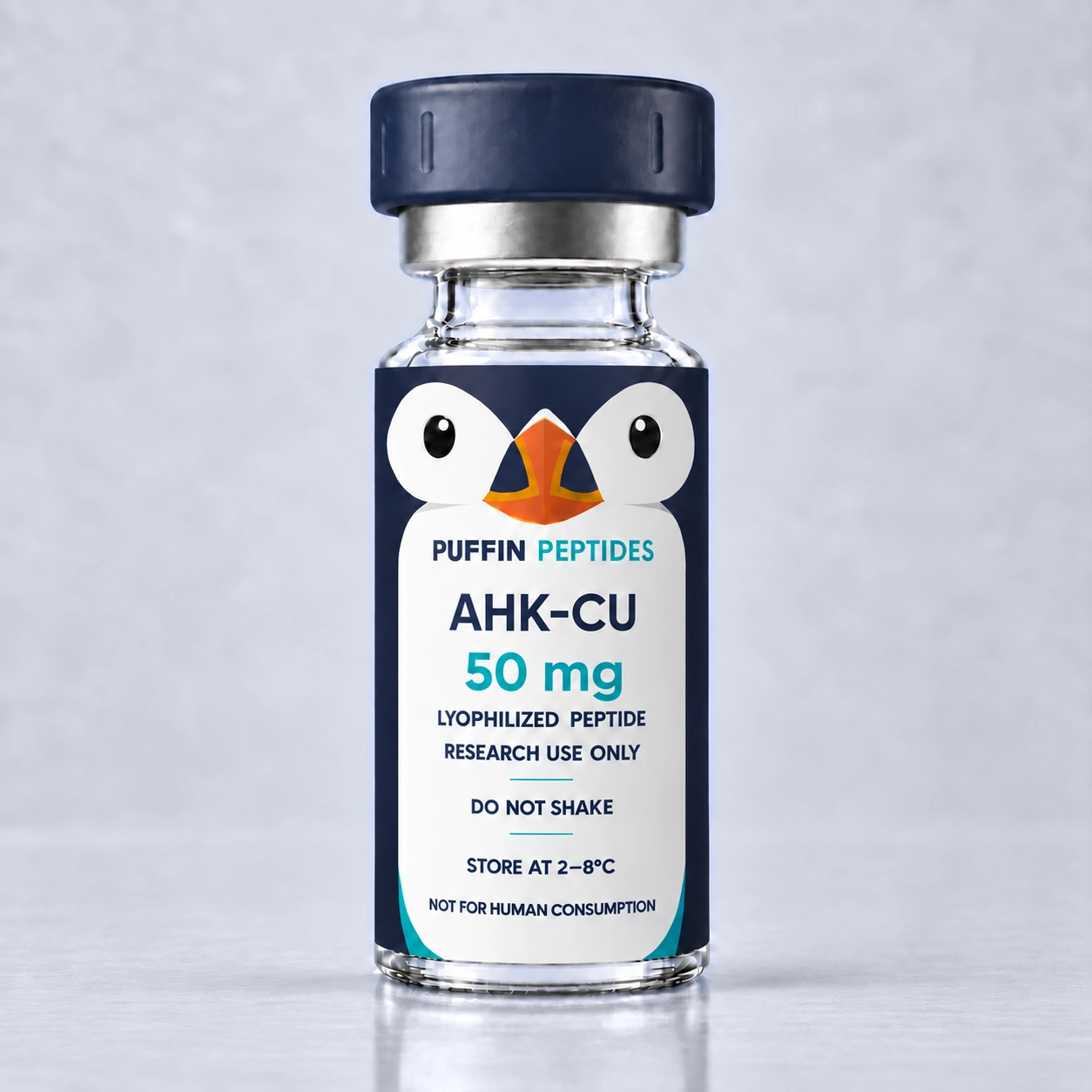
Explore AHK-CU
Review available strengths, pricing, stock status, and product documentation.