
At A Glance
- Epithalon is a four-amino-acid research peptide that often appears in longevity conversations. The interest centres on how cells age, regulate their activity, and maintain the ends of their chromosomes.
- Human-cell culture studies have reported changes associated with telomerase and cell proliferation.
- Gene regulation and cellular aging are recurring themes in the literature.
What Is EPITHALON?
Epithalon is a four-amino-acid research peptide that often appears in longevity conversations. The interest centres on how cells age, regulate their activity, and maintain the ends of their chromosomes.
Those chromosome ends are called telomeres. They help protect genetic material, a little like protective tips. Some cell studies have explored whether Epithalon changes telomerase, an enzyme involved in maintaining those ends.
Why Do Telomeres Attract So Much Attention?
They connect cell division with long-term cellular maintenance. That makes them an interesting part of aging biology, alongside many other processes. Epithalon research gives scientists one way to explore that particular piece of the picture.
Are Epithalon And Epithalamin The Same?
Epithalon, also spelled epitalon, is a defined four-amino-acid peptide. Epithalamin is a pineal-derived mixture. Keeping the names separate helps make sense of older studies and avoids assigning a mixture’s findings to a single peptide.
A Closer Look At EPITHALON
Here are the key observations and the context that helps explain them. The original sources are linked below if you would like to explore further.
| Study or context | What was explored | What it tells us | Useful context |
|---|---|---|---|
| Cell studies | Telomerase and telomere-related changes | Human-cell culture studies have reported changes associated with telomerase and cell proliferation. | Cell maintenance is the question here, rather than demonstrated longer life in people. |
| Research context | A focused area of aging biology | Gene regulation and cellular aging are recurring themes in the literature. | Independent replication and long-term cell effects remain useful follow-up questions. |
Common Questions About EPITHALON
What is EPITHALON?+
Epithalon is a four-amino-acid research peptide that often appears in longevity conversations. The interest centres on how cells age, regulate their activity, and maintain the ends of their chromosomes.
Why do telomeres attract so much attention?+
They connect cell division with long-term cellular maintenance. That makes them an interesting part of aging biology, alongside many other processes. Epithalon research gives scientists one way to explore that particular piece of the picture.
Are Epithalon and epithalamin the same?+
Epithalon, also spelled epitalon, is a defined four-amino-acid peptide. Epithalamin is a pineal-derived mixture. Keeping the names separate helps make sense of older studies and avoids assigning a mixture’s findings to a single peptide.
Sources
Want to go a little deeper? These links take you to the studies and official records behind the guide. Study registries describe the plan; published papers report the findings.
- Peptide promotes overcoming of the division limit in human cell culturePubMed-indexed primary cell study · 2004
Primary cell-culture report from a limited research network. Telomere and passage findings do not establish clinical longevity or long-term genomic safety.
- Think twice before injecting peptides bought online: unauthorized products can seriously harm youHealth Canada · 2026
For EPITHALON context, this official Canadian advisory explains why a research-use label does not establish authorization, safety, efficacy, or product quality for human use.
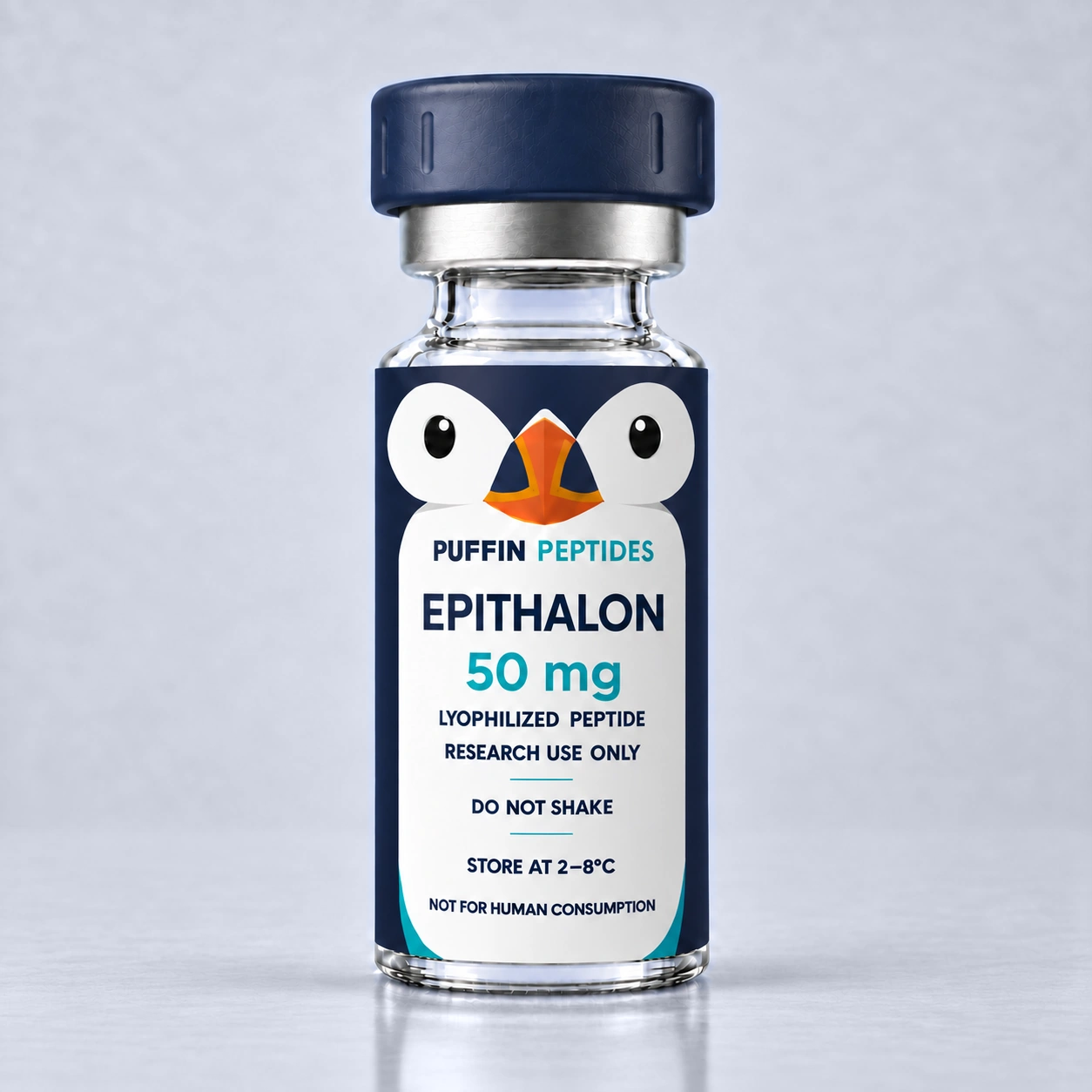
Explore EPITHALON
Review available strengths, pricing, stock status, and product documentation.