
At A Glance
- GHK-Cu is a small peptide bound to copper. If you have seen copper peptides mentioned alongside skin texture, fine lines, or hair, this is one of the main names behind that conversation.
- Studies report changes in collagen-related processes, matrix activity, and gene expression.
- Topical studies add human skin context to the laboratory literature.
What Is GHK-CU?
GHK-Cu is a small peptide bound to copper. If you have seen copper peptides mentioned alongside skin texture, fine lines, or hair, this is one of the main names behind that conversation.
GHK is a naturally occurring three-amino-acid peptide that binds copper. The complex is studied for how it influences the material around cells, including collagen-related activity and tissue remodelling. Both the peptide and its copper partner are part of the story.
Why Does GHK-Cu Come Up So Often In Skincare?
Collagen helps give skin its structure. Laboratory work has explored how GHK-Cu affects collagen production, cell activity, and the rebuilding of tissue. Those connections make the skin interest easy to understand: researchers are looking at the support system, not just the surface.
How Is GHK-Cu Different From AHK-Cu?
Both are copper-binding tripeptides, but one amino acid differs. GHK-Cu has a broader tissue-remodelling and skin-research background; AHK-Cu is especially associated with hair-follicle studies. Similar names make them easy to confuse, so it helps to keep their separate studies in view.
A Closer Look At GHK-CU
Here are the key observations and the context that helps explain them. The original sources are linked below if you would like to explore further.
| Study or context | What was explored | What it tells us | Useful context |
|---|---|---|---|
| Cell and tissue research | Collagen and tissue remodelling | Studies report changes in collagen-related processes, matrix activity, and gene expression. | The tissue, copper conditions, and formulation help explain the response. |
| Skin context | Topical and cosmetic research | Topical studies add human skin context to the laboratory literature. | Results for a topical formulation describe that formulation and route. |
Common Questions About GHK-CU
What is GHK-CU?+
GHK-Cu is a small peptide bound to copper. If you have seen copper peptides mentioned alongside skin texture, fine lines, or hair, this is one of the main names behind that conversation.
Why does GHK-Cu come up so often in skincare?+
Collagen helps give skin its structure. Laboratory work has explored how GHK-Cu affects collagen production, cell activity, and the rebuilding of tissue. Those connections make the skin interest easy to understand: researchers are looking at the support system, not just the surface.
How is GHK-Cu different from AHK-Cu?+
Both are copper-binding tripeptides, but one amino acid differs. GHK-Cu has a broader tissue-remodelling and skin-research background; AHK-Cu is especially associated with hair-follicle studies. Similar names make them easy to confuse, so it helps to keep their separate studies in view.
Sources
Want to go a little deeper? These links take you to the studies and official records behind the guide. Study registries describe the plan; published papers report the findings.
- Stimulation of collagen synthesis in fibroblast cultures by the tripeptide-copper complex glycyl-L-histidyl-L-lysine-Cu2+FEBS Letters · 1988
Primary fibroblast-culture evidence. It does not establish systemic or injectable effects in people.
- Think twice before injecting peptides bought online: unauthorized products can seriously harm youHealth Canada · 2026
For GHK-CU context, this official Canadian advisory explains why a research-use label does not establish authorization, safety, efficacy, or product quality for human use.
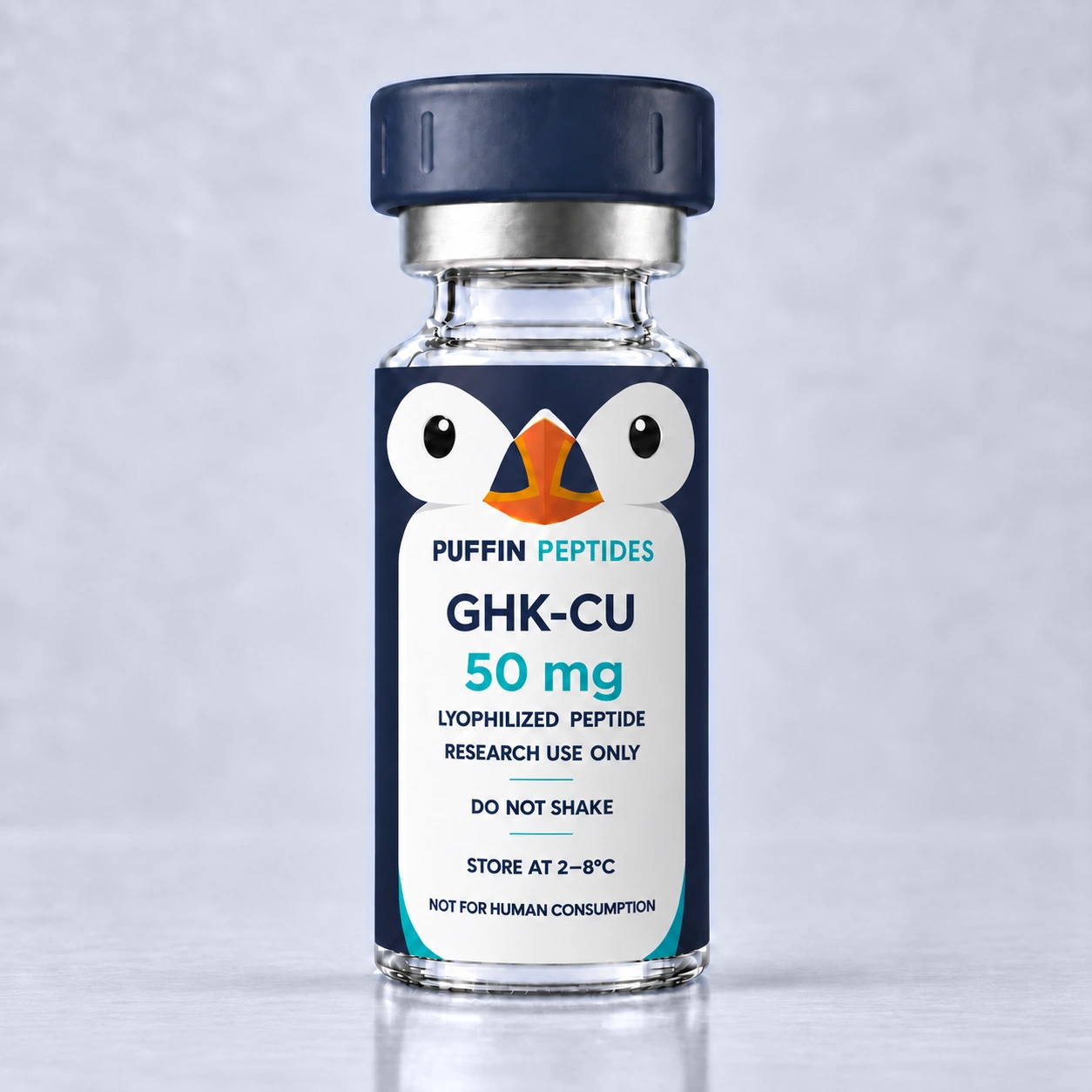
Explore GHK-CU
Review available strengths, pricing, stock status, and product documentation.