
At A Glance
- SS-31, also known as elamipretide, is a peptide studied around mitochondria—the structures that help cells produce usable energy. Its focus is the machinery supporting that process.
- Biophysical and preclinical work explores cardiolipin interactions and downstream mitochondrial effects.
- The linked U.S. label describes Forzinity’s accelerated approval for a specified Barth-syndrome population.
What Is SS-31?
SS-31, also known as elamipretide, is a peptide studied around mitochondria—the structures that help cells produce usable energy. Its focus is the machinery supporting that process.
Inside mitochondria, a specialized membrane helps organize energy-producing proteins. A lipid called cardiolipin is part of that arrangement. SS-31 associates with cardiolipin and is studied for effects on membrane organization and energy transfer under stress.
Why Does SS-31 Come Up In Energy And Resilience Conversations?
Instead of simply supplying more fuel, its research angle is how well the energy-producing machinery is organized. That makes it interesting in mitochondrial-stress and disease models, where the condition of the machinery can be a central question.
How Is SS-31 Different From MOTS-C?
SS-31 is studied around mitochondrial membrane function. MOTS-C is a mitochondria-derived signal involved in metabolic and stress responses. One useful distinction is the machinery and the messaging: related topics, but different ways of approaching them.
A Closer Look At SS-31
Here are the key observations and the context that helps explain them. The original sources are linked below if you would like to explore further.
| Study or context | What was explored | What it tells us | Useful context |
|---|---|---|---|
| Mitochondrial research | Cardiolipin and membrane organization | Biophysical and preclinical work explores cardiolipin interactions and downstream mitochondrial effects. | The disease model and the measured outcome help explain the response. |
| Clinical product | Elamipretide and Barth syndrome | The linked U.S. label describes Forzinity’s accelerated approval for a specified Barth-syndrome population. | That indication concerns the regulated formulation, not general energy enhancement or equivalence with a research vial. |
Common Questions About SS-31
What is SS-31?+
SS-31, also known as elamipretide, is a peptide studied around mitochondria—the structures that help cells produce usable energy. Its focus is the machinery supporting that process.
Why does SS-31 come up in energy and resilience conversations?+
Instead of simply supplying more fuel, its research angle is how well the energy-producing machinery is organized. That makes it interesting in mitochondrial-stress and disease models, where the condition of the machinery can be a central question.
How is SS-31 different from MOTS-C?+
SS-31 is studied around mitochondrial membrane function. MOTS-C is a mitochondria-derived signal involved in metabolic and stress responses. One useful distinction is the machinery and the messaging: related topics, but different ways of approaching them.
Sources
Want to go a little deeper? These links take you to the studies and official records behind the guide. Study registries describe the plan; published papers report the findings.
- the official FDA labelU.S. Food and Drug Administration · Linked record
Forzinity is approved in the United States for a specific Barth-syndrome population under accelerated approval. Continued approval can depend on verification of clinical benefit; the label defines the actual product and indication.
- Think twice before injecting peptides bought online: unauthorized products can seriously harm youHealth Canada · 2026
For SS-31 context, this official Canadian advisory explains why a research-use label does not establish authorization, safety, efficacy, or product quality for human use.
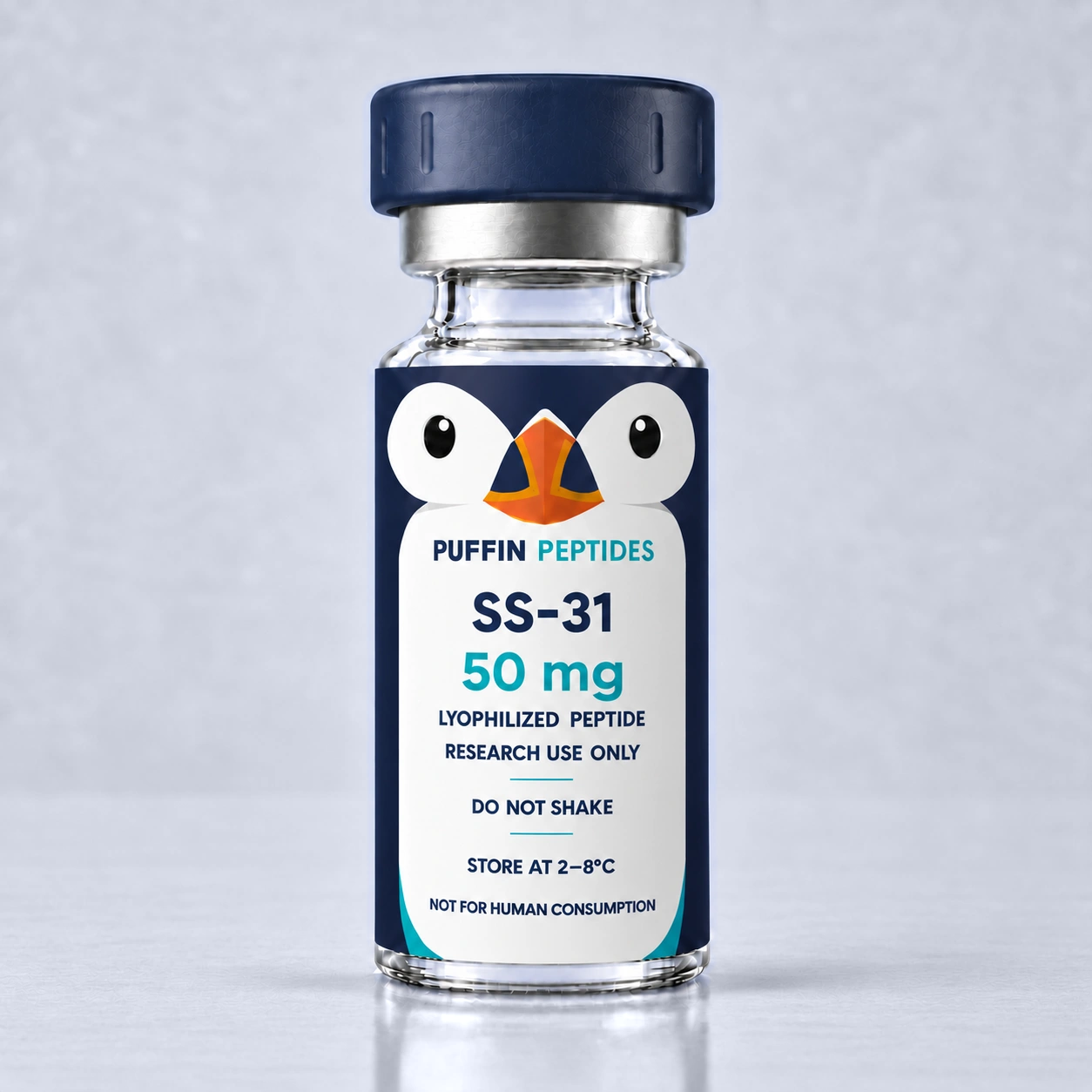
Explore SS-31
Review available strengths, pricing, stock status, and product documentation.